List of Filipino Soups: Best Pinoy Sabaw for Rainy Days
When the rain pours, Filipinos reach for sabaw. Here are the best Pinoy soups, from sinigang and tinola to Cebu's pochero and balbakwa, plus a sweet champorado bonus.
In this article
- List of Filipino soups at a glance
- 1. Sinigang: the sour king of pinoy soups
- 2. Tinola: ginger chicken soup
- 3. Bulalo: beef marrow soup
- 4. Nilagang baka: everyday boiled beef soup
- 5. Sotanghon: glass noodle chicken soup
- 6. Utan bisaya: Visayan vegetable soup
- 7. Sabaw ng isda (tinowa): simple fish soup
- Best pochero in Cebu: what makes it different
- How to cook balbakwa
- Bonus: champorado for rainy mornings
This list of Filipino soups covers the bowls Filipinos crave when the rain starts: sour sinigang, gingery tinola, rich bulalo, simple nilaga, comforting sotanghon, Visayan utan bisaya and fish sabaw, plus Cebu favourites pochero and balbakwa. Every one is hot, brothy and best eaten with plenty of rice. Pick one that matches what's in your fridge and what the weather is doing.
Before you cook, check the forecast on our weather page. Rainy season in much of the country runs roughly from June to November, and Cebu and Davao have their own patterns; our best time to visit guide explains the differences.
List of Filipino soups at a glance
| Soup | Main ingredients | Flavour | Cooking time (approx.) |
|---|---|---|---|
| Sinigang | Pork, shrimp or fish; tamarind; vegetables | Sour | 1-1.5 hours (pork) |
| Tinola | Chicken, ginger, green papaya or sayote, chili leaves | Gingery, light | 45 minutes |
| Bulalo | Beef shank with marrow bone, corn, cabbage | Rich, beefy | 3-4 hours |
| Nilagang baka | Beef, potatoes, cabbage, pechay | Clean, mild | 2-3 hours |
| Sotanghon | Glass noodles, chicken, annatto | Savoury, comforting | 40 minutes |
| Utan bisaya | Mixed vegetables, fish or pork | Light, fresh | 30 minutes |
| Sabaw ng isda / tinowa | Fresh fish, tomatoes, ginger, onion | Clean, savoury | 20 minutes |
| Pochero (Cebu) | Beef shank, corn, vegetables | Rich, beefy | 3-4 hours |
| Balbakwa | Oxtail, beef skin and feet | Thick, gelatinous | 4+ hours |
| Champorado (bonus) | Glutinous rice, tablea chocolate | Sweet | 30 minutes |
1. Sinigang: the sour king of pinoy soups
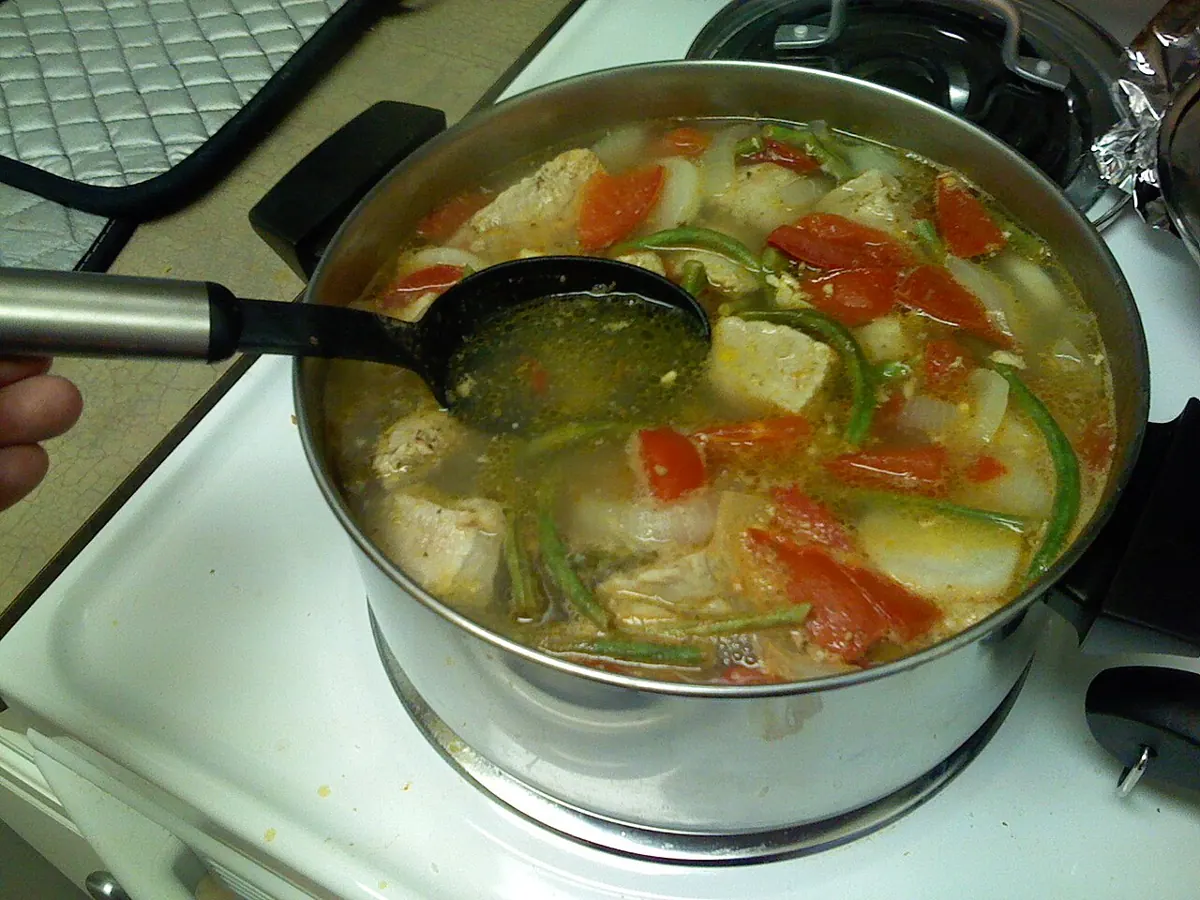
Sinigang is probably the most famous of all Pinoy soups. Meat or seafood simmers with a souring agent, usually young tamarind, along with tomatoes, onion, radish, string beans, eggplant and kangkong (water spinach). Pork belly or ribs are common, but shrimp, milkfish and grouper are just as loved.
Cooking from scratch with fresh tamarind gives a rounder sourness; packet mixes are faster. Other souring agents include kamias (bilimbi), green mango and guava. Try our sinigang na lapu-lapu recipe for a seafood version.
2. Tinola: ginger chicken soup
Tinola is the Filipino answer to chicken soup. Sauté lots of ginger, garlic and onion, add chicken pieces and fish sauce, then simmer in water until tender. Finish with green papaya or sayote (chayote) and a handful of dahon ng sili (chili leaves) or malunggay (moringa).
It is light, warming and a favourite when someone feels under the weather. Native chicken gives a deeper flavour but takes longer to soften.
3. Bulalo: beef marrow soup
Bulalo is beef shank and marrow bone simmered for hours until the meat falls off and the marrow turns soft and buttery. Corn on the cob, cabbage, pechay and sometimes potatoes go in near the end. Dip the meat in fish sauce with chili and kalamansi.
Batangas and Tagaytay made bulalo famous, and a steaming pot on a cool, rainy day is hard to beat.
4. Nilagang baka: everyday boiled beef soup
Nilaga means "boiled", and nilagang baka is the simpler cousin of bulalo. Beef brisket or shank boils with onion and peppercorns, then potatoes, cabbage, pechay and sometimes corn and saba bananas are added. The clear broth is clean and mild; season with fish sauce at the table.
Pork nilaga (nilagang baboy) is just as common and cooks faster.
5. Sotanghon: glass noodle chicken soup
Chicken sotanghon is a cosy noodle soup made with sotanghon (mung bean glass noodles), shredded chicken, garlic, onion, carrots and cabbage. Annatto (atsuete) oil gives it a golden-orange colour. Many families serve it at birthdays and on cold mornings.
If you prefer a Visayan noodle soup, our batchoy recipe is another great rainy-day option.
6. Utan bisaya: Visayan vegetable soup
Utan simply means vegetable dish in Bisaya. Utan bisaya is a light soup of whatever is fresh: squash, okra, string beans, eggplant, alugbati (Malabar spinach), malunggay and sweet potato leaves, simmered with ginger and onion. A piece of fried or dried fish, or a little pork, adds savouriness.
It is healthy, quick and very Cebuano-Davaoeño. See our full utan bisaya recipe.
7. Sabaw ng isda (tinowa): simple fish soup
In Cebu and Davao, tinowa or tinola nga isda is fish simmered in water with tomatoes, onion, ginger, lemongrass and green onions. It is the "tu" in sutukil. Fresh fish is essential; the broth should taste of the sea, not of anything fishy.
Best pochero in Cebu: what makes it different
In Manila, pochero usually means a tomato-based stew with saba bananas and chickpeas. In Cebu, pochero is closer to bulalo: a big bowl of beef shank and bone in a clear, rich broth with corn, cabbage, pechay and sometimes saba. Local pocherohan (pochero eateries) often serve it with rice and a dip of soy sauce, kalamansi and chili.
When people search for the best pochero in Cebu, the honest answer is that many neighbourhood eateries are excellent. Look for places that are busy at lunch, where the pot is clearly simmering all day. Our cheap Cebu food guide has more tips.
How to cook balbakwa
Balbakwa (also spelled balbacua) is a Cebuano and Mindanao comfort dish made from oxtail, beef skin and feet, cooked for many hours until the collagen turns the broth thick and sticky. Recipes vary by household; some add black beans, annatto, star anise or a spoon of peanut butter.
- Clean the oxtail, skin and feet well, then blanch in boiling water for 10 minutes and drain.
- Sauté garlic, onion, ginger and lemongrass in a large pot.
- Add the meat, cover with fresh water, and season with fish sauce, soy sauce and pepper.
- Simmer gently for 4 hours or more (a pressure cooker can cut this to about an hour), topping up water as needed.
- Add annatto, fermented black beans or a little peanut butter if you like, then simmer until the skin is very soft and the broth is thick.
- Finish with chopped spring onions and chili, and serve with rice.
Bonus: champorado for rainy mornings
Champorado is not a soup, but it belongs in any rainy-day list. Glutinous rice simmers with tablea (pure cacao tablets) and sugar until thick, then gets a swirl of evaporated milk. Many Filipinos eat it with crispy tuyo (dried fish) for a sweet-salty mix. In Cebu, the related sikwate (thick hot chocolate) is paired with puto maya (sticky rice cakes).
Frequently Asked Questions
What is the most popular Filipino soup?
Sinigang is often named the most popular, thanks to its distinctive sour tamarind broth. Tinola, bulalo and nilaga are also family favourites.
What is the difference between bulalo and Cebu pochero?
They are similar beef shank soups with corn and vegetables. Bulalo is famously associated with Batangas and Tagaytay, while in Cebu the same kind of rich beef soup is usually called pochero.
What is balbakwa made of?
Balbakwa is made from oxtail, beef skin and feet, slow-cooked until the broth turns thick and gelatinous. Recipes vary, with some adding black beans, annatto or peanut butter.
What is the quickest Filipino soup to cook?
Fish tinowa and utan bisaya are among the fastest, taking around 20-30 minutes. Sotanghon and tinola also come together in under an hour.