La Paz Batchoy Recipe Plus Davao Home-Style Batchoy
Two batchoys in one post: Iloilo's famous La Paz noodle soup and the gingery pork-and-misua batchoy cooked in Davao and Bisaya homes.
In this article
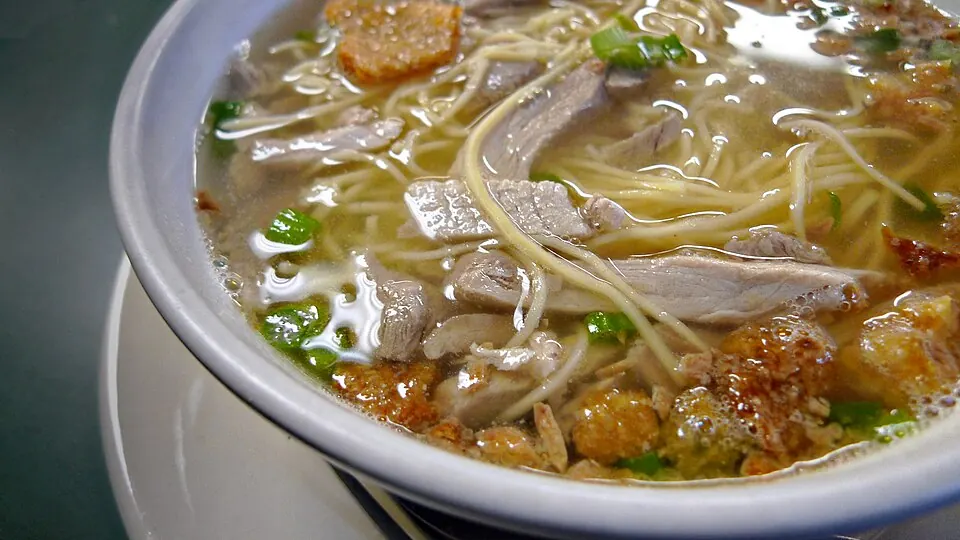
This La Paz batchoy recipe gives you a deep, savoury pork broth, springy egg noodles, tender pork and liver, and a crunchy shower of crushed chicharon and fried garlic. Below it you will also find the simpler Davao and Bisaya home-style batchoy, a gingery pork offal soup with misua noodles that many families cook on rainy evenings.
La Paz batchoy recipe roots: La Paz, Iloilo
Batchoy is most closely linked with La Paz, a district of Iloilo City in Western Visayas, where the dish became famous in the stalls of the La Paz public market. True La Paz batchoy is a noodle soup built on a long-simmered pork and beef bone broth, topped with pork slices, offal and chicharon (pork crackling). It is now sold across the country, and Iloilo still treats it as a point of pride.
In many Tagalog and Bisaya households, though, "batchoy" (also spelled batsoy or bachoy) means a different dish: pork innards sautéed with ginger and garlic, simmered in broth and finished with thin misua (wheat vermicelli). That is the version many Davao families grew up with.
| La Paz batchoy | Davao / Bisaya home-style batchoy | |
|---|---|---|
| Origin | La Paz, Iloilo City | Common in Visayas and Mindanao homes, including Davao |
| Noodles | Fresh egg noodles (miki) | Misua (thin wheat noodles) |
| Broth | Long-simmered pork bone broth | Quick broth from sautéed pork and offal |
| Key flavour | Savoury, slightly sweet, garlicky | Gingery, peppery |
| Toppings | Chicharon, fried garlic, spring onion, sometimes a raw egg | Spring onion, sometimes chili leaves |
| Time | 1.5 to 3 hours | About 45 minutes |
Ingredients
For the La Paz-style broth:
- 1 kg pork bones (neck or leg bones)
- 2 litres water
- 1 onion, halved
- 1 thumb ginger, sliced
- 1 tbsp whole peppercorns
- 2 tbsp fish sauce (patis)
- 1 tbsp shrimp paste (bagoong alamang), optional but traditional
- 1 tbsp brown sugar
For the meat and toppings:
- 250 g pork shoulder or loin
- 150 g pork liver
- 150 g pork intestines or kidney, cleaned (optional)
- 500 g fresh egg noodles (miki)
- 1 cup crushed chicharon
- 1 head garlic, minced and fried until golden in 1/4 cup oil
- 3 stalks spring onion, chopped
- 4 eggs (optional, cracked into hot bowls)
- Salt and ground black pepper
For Davao home-style batchoy (alternative):
- 300 g pork (belly or shoulder), sliced thinly
- 200 g mixed pork offal (liver, heart, kidney), cleaned and sliced
- 1 thumb ginger, cut into strips
- 4 cloves garlic, minced
- 1 onion, sliced
- 1.5 litres water or broth
- 2 bundles misua
- 2 tbsp fish sauce
- A handful of chili leaves (dahon sa sili) or malunggay
- Spring onion and pepper to finish
Instructions
- Make the broth. Rinse the pork bones, place them in a large pot with water, and bring to a boil. Skim off the scum, then add onion, ginger and peppercorns. Simmer gently, partly covered, for at least 1 hour (2 to 3 hours is better).
- Cook the meat. Add the pork shoulder to the simmering broth for 30 to 40 minutes until tender. Remove, cool slightly and slice thinly.
- Prepare the offal. If using intestines or kidney, boil them separately in salted water with a slice of ginger until tender, then slice. Slice the liver thinly and keep it raw until the end.
- Season the broth. Strain the broth into a clean pot. Stir in fish sauce, shrimp paste and brown sugar. Taste and adjust with salt and pepper; the broth should be rich and slightly sweet.
- Fry the garlic. Fry the minced garlic in oil over low heat until golden. Drain, keeping the garlic oil.
- Cook the liver. Just before serving, add the liver slices to the hot broth for 1 to 2 minutes only, so they stay tender.
- Blanch the noodles. Dip portions of egg noodles in boiling water for about 30 seconds using a strainer, then drain and place in bowls.
- Assemble. Top the noodles with pork slices, offal and liver. Ladle hot broth over everything. Add a raw egg to each bowl if you like; the hot broth will half-cook it.
- Finish. Sprinkle with crushed chicharon, fried garlic, a few drops of garlic oil and spring onion. Serve immediately.
For the Davao home-style batchoy:
- Heat a little oil in a pot and sauté the ginger, garlic and onion until fragrant.
- Add the pork and offal (except liver) and cook until lightly browned. Season with fish sauce.
- Pour in the water or broth, bring to a boil, then simmer for 25 to 30 minutes until the meat is tender.
- Add the liver and simmer for 2 minutes more.
- Add the misua and chili leaves or malunggay, cook for 1 minute, then turn off the heat. Season with pepper and serve with spring onion.
Tips for the best batchoy
- Do not rush the broth. The longer simmer is what gives La Paz batchoy its body.
- Buy fresh offal from a trusted stall and clean it well; wet markets in Davao such as Bankerohan sell everything you need early in the morning.
- Crush chicharon at the last minute so it stays crisp.
- Leftover lechon can stand in for pork slices and adds smoky flavour. See our lechon paksiw recipe for more ways to use leftovers.
Batchoy belongs with other comfort bowls for wet weather; browse our Filipino soups for rainy days and the wider Davao food guide. Planning a trip to Iloilo to try the original? Check the distance between Philippine cities first.
Frequently Asked Questions
What is the difference between La Paz batchoy and regular batchoy?
La Paz batchoy is an Iloilo noodle soup with egg noodles, rich pork broth and chicharon. The home-style batchoy common in Tagalog and Bisaya kitchens is a gingery pork offal soup with misua.
What noodles are used in La Paz batchoy?
Fresh egg noodles called miki are traditional. Dried egg noodles work too; just cook them according to the packet before adding the broth.
Can I make batchoy without pork offal?
Yes. Use only pork shoulder or belly, or add chicken. The flavour is milder, so make the broth a little stronger with extra bones or shrimp paste.
How do I store leftover batchoy?
Keep the broth, meat and noodles in separate containers in the fridge for up to 2 to 3 days. Reheat the broth until boiling and assemble fresh bowls.