Simian Crease Meaning: Single Palmar Crease Facts and Myths
A single straight line across your palm is called a simian crease. Here is what it means medically, how common it is, and what folklore says.
In this article
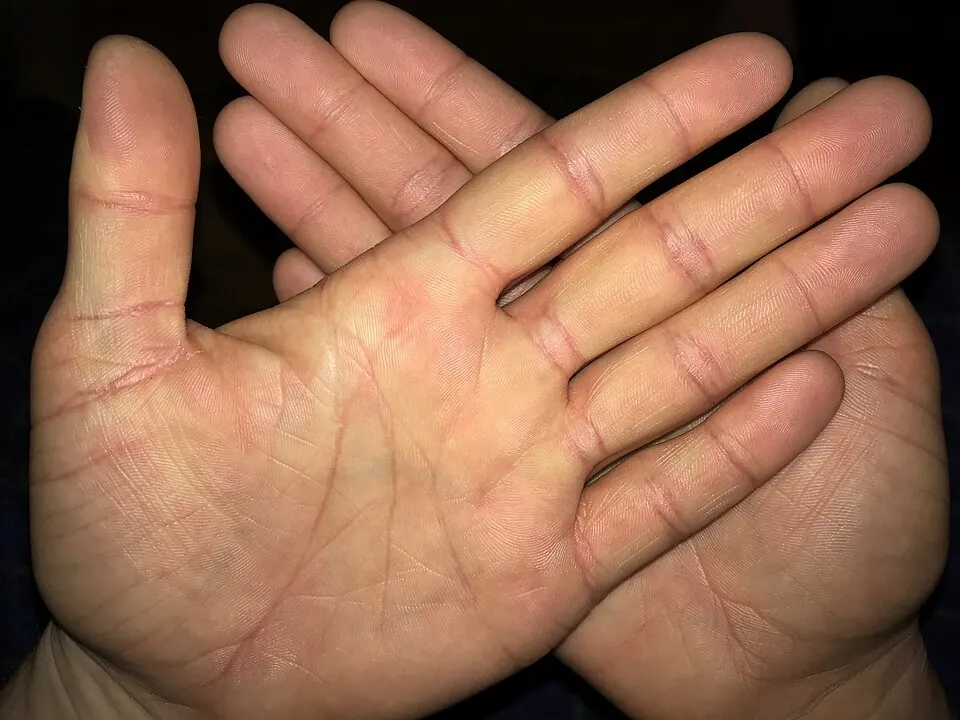
A simian crease is a single line that runs straight across the palm, instead of the usual two separate lines (the "heart line" and "head line"). Doctors now prefer the term single transverse palmar crease or simply single palmar crease. It is uncommon but not rare, and the large majority of people who have one are completely healthy.
This article is for general information, not medical advice. If you have concerns about your own or your child's health, please see a doctor.
What Is a Simian Crease?
Most people have two main horizontal creases across the palm. The upper one (the distal transverse crease, called the heart line in palmistry) starts under the little finger. The lower one (the proximal transverse crease, called the head line) starts near the thumb side. In a simian crease, these two lines are joined into one continuous line that crosses the whole palm.
The name "simian" comes from the fact that this pattern resembles a crease seen in some apes and monkeys. Because the word can feel unkind, medical writers increasingly use "single transverse palmar crease" (sometimes shortened to STPC). You may also see misspellings like "symian crease" or "simeon crease" online; they all refer to the same thing.
Related variations
- Sydney line: The lower (head) line extends all the way across the palm, while the upper line is still present.
- Partial or bridged creases: The two lines are connected by a short line rather than fully merged.
These variations are also usually harmless on their own.
How Common Is a Simian Crease?
Palm creases form early in pregnancy, while the hands are developing in the womb. Studies have found that roughly 1 to 4 percent of people have a single palmar crease on at least one hand, though the figure varies between populations and depends on how strictly the crease is defined.
| Feature | What studies generally show |
|---|---|
| One hand | More common than both hands |
| Both hands | Less common |
| Sex | Seen more often in males than females |
| Family pattern | Can run in families |
| Health | Most people with it have no related condition |
Having a simian line on the left hand only, the right hand only, or both hands does not by itself tell you anything about health.
Simian Crease on Both Hands: Should You Worry?
In most cases, no. A single palmar crease on one or both hands is often just a normal variation, like having attached earlobes or a particular hair whorl. It can run in families, so siblings or a parent and child may share it.
Doctors pay attention to palm creases because a single crease is more common in some genetic and developmental conditions. The best known is Down syndrome (trisomy 21). It can also appear more often with certain other chromosomal conditions and with fetal alcohol spectrum disorders.
The key point is that a crease alone is never enough for a diagnosis. Doctors look at it only as one small clue alongside many other signs, such as growth, development, facial features, muscle tone and heart health, and confirm any suspicion with proper tests.
When to See a Doctor
Consider talking to a doctor if a single palmar crease appears together with other concerns, such as:
- Delays in sitting, walking or speaking
- Feeding difficulties or poor weight gain in a baby
- Low muscle tone (a "floppy" baby)
- Heart murmurs or other health issues
- Several unusual physical features noticed at birth
A paediatrician can examine your child and, if needed, recommend further tests. Reliable general health information is also available from sources such as MedlinePlus.
Simian Line in Palmistry
Outside medicine, the simian line has a colourful reputation in palmistry and folklore. Because the heart line (emotion) and head line (reason) are merged, palm readers often claim that people with a simian line:
- Have intense, all-or-nothing personalities
- Struggle to separate feelings from logic
- Are extremely focused or stubborn
- Are either very successful or face big struggles
There is no scientific evidence for any of these claims. Palmistry is entertainment and tradition, not a way to predict personality, health or fate. Enjoy it as folklore, but do not make decisions based on it.
Palm reading in the Philippines
Interest in palm reading is common in the Philippines, from fortune tellers near churches to friends reading each other's hands for fun. Interestingly, the Bisaya word palad means both "palm of the hand" and "fate" or "luck", which shows how closely the two ideas are linked in local culture. Look up more words in our Bisaya dictionary, or explore other local beliefs in our article on the tuko and Filipino folklore.
The Science of Body Features
Small body variations like palm creases, dimples and facial symmetry have long fascinated people. Science explains many of them as the natural result of how we develop before birth, shaped by genes and environment. If you enjoy this topic, read our explainer on facial symmetry and why some faces look "perfect".
For other health topics written in plain language, see our guide to ovarian cancer warning signs.
Quick Summary
| Question | Short answer |
|---|---|
| What is it? | One straight crease across the palm instead of two |
| Medical name | Single transverse palmar crease |
| How common? | Roughly 1-4% of people on at least one hand |
| Is it dangerous? | No; it is a physical feature, not a disease |
| Linked to conditions? | More common in Down syndrome and some other conditions |
| Does it predict personality? | No scientific evidence |
Frequently Asked Questions
What does a simian crease mean?
It means the two main horizontal palm lines are merged into one line across the palm. On its own, it is usually a harmless variation and does not mean anything is wrong.
Is a simian crease a sign of Down syndrome?
It is more common in people with Down syndrome, but most people with a simian crease do not have Down syndrome. A crease alone cannot diagnose any condition.
How rare is a simian line on both hands?
Having it on both hands is less common than on one hand, but it is still seen in healthy people and can run in families.
What does a simian line mean in palmistry?
Palm readers say it signals intense or single-minded personalities, but there is no scientific evidence for this. Palmistry is folklore and entertainment.
Should I see a doctor about a single palmar crease?
Only if there are other concerns, such as developmental delays or health problems. Otherwise, you can simply mention it at a routine check-up.