Tuko Lizard in the Philippines: Calls, Folklore and the Law
That loud "to-kay" call at night is the tuko. Here is the story of the Philippine tokay gecko, its folklore, the tuko-buying craze and why trading it can break the law.
In this article
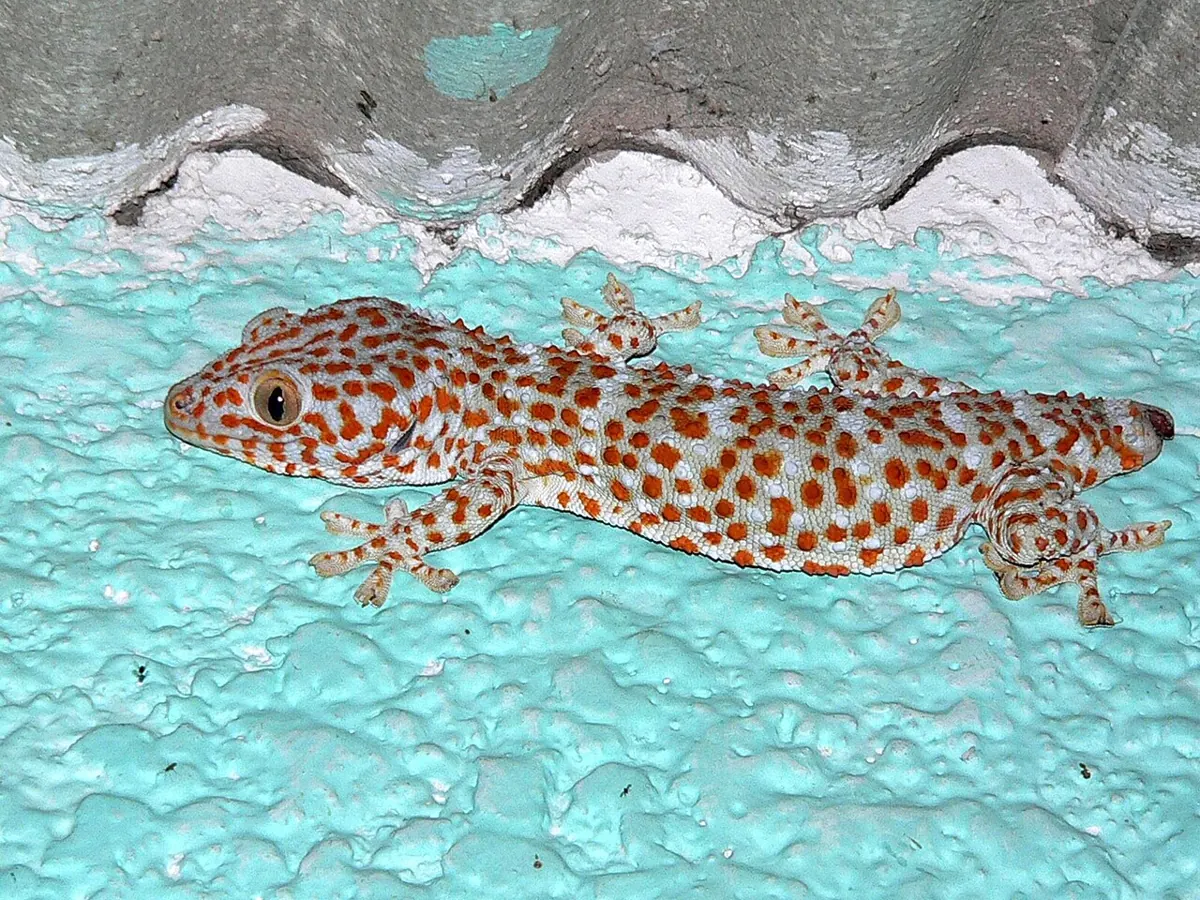
The tuko lizard is the tokay gecko (Gekko gecko), the big spotted gecko whose loud "to-kay" or "tu-ko" call echoes through Filipino homes at night. It is harmless to people if left alone, eats insects, and has a rich place in local folklore. A few years back it also became the centre of a strange buying craze that wildlife authorities had to step in to stop.
Quick facts about the Philippine lizard tuko
| Fact | Details |
|---|---|
| Common names | Tuko (Tagalog and Bisaya), tokay gecko (English) |
| Scientific name | Gekko gecko |
| Size | One of the largest geckos; adults can reach roughly 25-35 cm including the tail |
| Colour | Blue-grey body with orange or rust spots, able to lighten or darken |
| Active | Mostly at night |
| Diet | Insects such as cockroaches, crickets and moths, and other small animals |
| Found | Across Southeast Asia, including much of the Philippines |
| Legal status | Wildlife; collecting and trading without a permit is regulated under RA 9147 |
What is the tuko lizard sound?
The tuko lizard sound is the reason most people know this animal before they ever see it. Males make a loud, two-part call that sounds like "to-kay" or "tu-ko", which gave the gecko its name in English and in Filipino languages. The call often begins with a rattling or clicking build-up, then the main syllables repeat several times, getting slower and weaker at the end.
Online, people sometimes describe it as a "hehehe lizard" because the clicking warm-up can sound like a throaty laugh. The calls are mainly about territory and attracting mates. They are most common in the evening and at night, and can be surprisingly loud inside a quiet house.
Why does it call from the ceiling?
Tuko like warm, sheltered spots with plenty of insects: roofs, ceilings, wall cavities, old trees and the space behind cabinets. Their toe pads let them climb walls and hang upside down, so a ceiling is a perfect hunting perch. If you hear one inside, it has probably found a good supply of insects nearby.
Tuko in the Philippines: folklore and beliefs
Every province seems to have its own stories about the tuko. These are beliefs, not facts, but they are part of everyday Filipino culture.
- Counting the calls. A common game is to count the "tu-ko" calls while thinking of a question, a bit like plucking petals for "loves me, loves me not". The last call decides the answer.
- Luck in the house. Some families say a tuko living in the house brings good fortune or guards the home, so they never chase it away.
- Fear of the bite. Tuko have strong jaws and will bite if grabbed. Folk stories exaggerate this, claiming the gecko will not let go, but a bite is mainly painful rather than dangerous. Still, clean any wound properly.
- The "sticky" fear. Some children are told the tuko can stick to your skin and never come off. This is simply a story.
In Bisaya-speaking homes, it is common to hear a parent say "Ayaw hilabti ang tuko" (don't touch the tuko), which is good advice. For more everyday expressions, see our 50 Bisaya phrases guide or try the Bisaya dictionary.
The tuko-buying craze
Around 2011, rumours spread across the Philippines that dealers were paying large sums for tuko, sometimes said to be hundreds of thousands of pesos for a big specimen. The stories claimed buyers wanted the geckos for traditional medicine abroad, including supposed cures for serious illnesses.
The result was a rush. People hunted geckos in their homes and forests, and online groups and text messages advertised "tuko wanted". Many sellers never found the promised buyer, and the craze was widely linked to scams, including people being asked to pay "fees" or buy special measuring equipment before a sale could happen.
Is tuko medicine real?
There is no reliable scientific evidence that tuko cures serious diseases. Health authorities and wildlife officials publicly warned people not to believe these claims. Anyone who is sick should see a licensed doctor, not rely on wildlife products.
Lessons from the craze
| Rumour | Reality |
|---|---|
| Buyers pay huge amounts for big tuko | Promised buyers often never appeared; many offers were scams |
| Tuko cures serious illnesses | No reliable evidence; health officials warned against it |
| Catching tuko is harmless | Collecting and trading wildlife without permits can be illegal |
| You need special gear to "weigh" the gecko | A common trick to make victims pay money upfront |
If you see an offer that sounds too good to be true, it probably is. The same thinking helps with online hoaxes; see our guide on how to spot fake news in the Philippines.
The law: RA 9147 and wildlife trade
The Philippines protects its wild animals under Republic Act 9147, the Wildlife Resources Conservation and Protection Act, passed in 2001. Under this law, collecting, possessing, transporting or trading wildlife generally requires permits from the proper authority, and violations can bring fines and jail time depending on the species and offence.
During the tuko craze, the Department of Environment and Natural Resources reminded the public that catching and selling geckos for trade without permits could violate the law. Rules and penalties can change and depend on details, so for official information check the Department of Environment and Natural Resources or its Biodiversity Management Bureau.
Living with a tuko at home
Most Filipinos simply share their homes with tuko. If one has moved into your ceiling, here is how to handle it calmly.
- Leave it alone if you can. It eats cockroaches and other pests, which is free pest control.
- Do not grab it. A tuko bite is strong and painful. If you must move it, gently guide it into a box with a broom and release it outdoors among trees.
- Seal gaps. Close holes in ceilings and eaves if you prefer it outside.
- Reduce insects. Fewer bugs near lights means fewer reasons for geckos to visit.
- Keep pets away. Cats and dogs may try to catch it and get bitten.
Tuko vs butiki
Not every lizard on your wall is a tuko. The small, pale house lizards that chirp softly are butiki (Tagalog) or tiki (Bisaya), which are much smaller geckos. The tuko is far bigger, chunkier, spotted, and much louder.
| Feature | Tuko | Butiki / tiki |
|---|---|---|
| Size | Large, thick-bodied | Small and slim |
| Colour | Blue-grey with orange spots | Pale, translucent brown or grey |
| Call | Loud "to-kay" | Soft chirps or clicks |
| Bite risk | Can bite hard if handled | Rarely bites |
Frequently Asked Questions
Is the tuko lizard dangerous?
The tuko is not venomous and does not attack people, but it can give a painful bite if grabbed. Leave it alone or move it gently with a box and broom.
Why is it called tuko?
The name comes from its loud call, which sounds like "tu-ko" or "to-kay". The English name tokay gecko comes from the same sound.
Can tuko cure diseases?
No reliable scientific evidence shows that tuko cures any disease. Officials warned the public about these claims during the tuko-buying craze, and sick people should consult a doctor.
Is it legal to sell tuko in the Philippines?
Collecting and trading wildlife without the proper permits is regulated under RA 9147, the Wildlife Resources Conservation and Protection Act. Check with the DENR before handling any wildlife for sale.