Learn Bisaya: 50 Essential Cebuano Phrases for Travellers
Fifty everyday Cebuano phrases for greetings, getting around, eating, shopping and counting, with pronunciation tips to help you sound friendly in Cebu and Davao.
In this article
- Quick Pronunciation Tips
- Greetings and Basics (1-12)
- Getting Around and Directions (13-22)
- Food and Eating (23-32)
- Shopping and Haggling (33-40)
- Numbers (41-50)
- Bisaya vs Tagalog: Watch Out for False Friends
- Practise With Our Bisaya Dictionary
- Tips to Learn Bisaya Faster
- Handy Bisaya Expressions Beyond the 50
The fastest way to learn Bisaya is to start with a handful of everyday phrases: greetings, thank-yous, directions, food and prices. Cebuano, the language most people mean by "Bisaya," is spoken across Cebu, much of the Visayas and most of Mindanao, including Davao City. Here are 50 essential phrases, grouped by situation, with simple pronunciation tips.
Quick Pronunciation Tips
Cebuano is mostly pronounced as it's written, which makes it friendly for beginners.
| Letter / sound | How to say it | Example |
|---|---|---|
| a | "ah" as in father | salamat (sah-LAH-maht) |
| e / i | often between "eh" and "ee" | ikaw (ee-KOW) |
| o / u | often between "oh" and "oo" | unsa (OON-sah) |
| ng | as in singer | ngalan (NGAH-lahn) |
| mga | said "mah-NGA" | mga tawo (people) |
Stress often falls on the second-to-last syllable, but not always. Listening and copying locals is the best teacher. Don't worry about perfection; Cebuanos and Davaoeños appreciate any effort.
Greetings and Basics (1-12)
| # | Bisaya | English |
|---|---|---|
| 1 | Maayong buntag | Good morning |
| 2 | Maayong udto | Good noon |
| 3 | Maayong hapon | Good afternoon |
| 4 | Maayong gabii | Good evening |
| 5 | Kumusta ka? | How are you? |
| 6 | Maayo ra ko | I'm fine |
| 7 | Salamat / Daghang salamat | Thank you / Thank you very much |
| 8 | Walay sapayan | You're welcome |
| 9 | Oo / Dili | Yes / No |
| 10 | Pasayloa ko | I'm sorry / Forgive me |
| 11 | Unsa imong ngalan? | What's your name? |
| 12 | Ako si ... | I am ... |
Getting Around and Directions (13-22)
| # | Bisaya | English |
|---|---|---|
| 13 | Asa ang ...? | Where is ...? |
| 14 | Asa ka padulong? | Where are you going? |
| 15 | Lugar lang | Stop here, please (to a jeepney or taxi driver) |
| 16 | Diri lang | Just here |
| 17 | Wala / Tuo | Left / Right |
| 18 | Diretso lang | Go straight ahead |
| 19 | Layo ba? | Is it far? |
| 20 | Duol ra | It's near |
| 21 | Pila ang plete? | How much is the fare? |
| 22 | Palihog | Please |
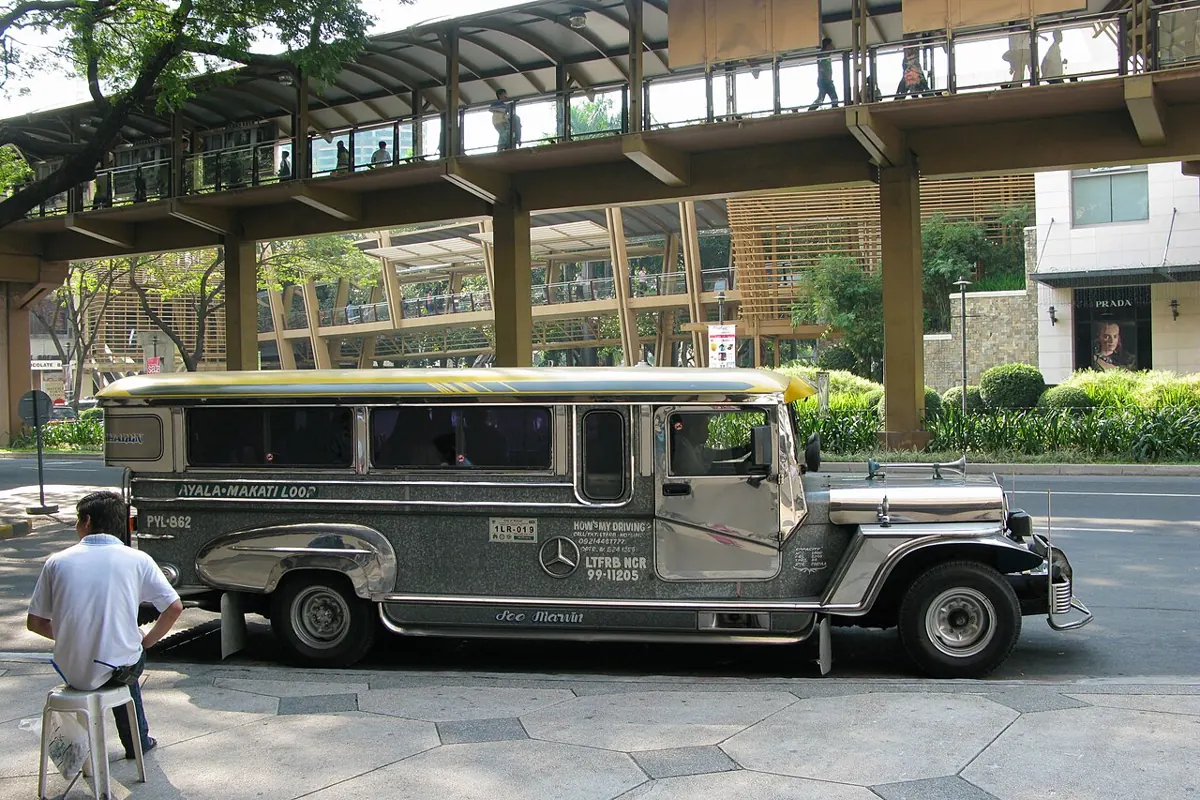
Lugar lang is the phrase every jeepney rider needs. Say it clearly when you want to get off. If you're heading downtown, our guide to getting to Magellan's Cross puts these phrases to work.
Food and Eating (23-32)
| # | Bisaya | English |
|---|---|---|
| 23 | Gigutom ko | I'm hungry |
| 24 | Giuhaw ko | I'm thirsty |
| 25 | Lami! | Delicious! |
| 26 | Kaon ta | Let's eat |
| 27 | Pila ni? | How much is this? |
| 28 | Usa pa | One more |
| 29 | Tubig | Water |
| 30 | Kan-on | Cooked rice |
| 31 | Ayaw'g hatag og sili | Please don't add chilli |
| 32 | Busog na ko | I'm full |
Rice is central to every Cebuano meal, and in Cebu you'll often get it as puso, rice cooked in a woven coconut-leaf pouch. Practise lami at a street-food stall; see our Cebu street food guide.
Shopping and Haggling (33-40)
| # | Bisaya | English |
|---|---|---|
| 33 | Pila? | How much? |
| 34 | Mahal kaayo! | Too expensive! |
| 35 | Barato | Cheap |
| 36 | Pwede hangyo? | Can I ask for a discount? |
| 37 | Kuhaon nako | I'll take it |
| 38 | Wala koy sinsilyo | I don't have small change |
| 39 | Naa ba moy ...? | Do you have ...? |
| 40 | Tan-awon sa nako | I'll just look first |
Hangyo is polite bargaining, common at markets but not in malls or fixed-price shops. Keep it friendly and smile; a small discount or an extra piece of fruit is often the result.
Numbers (41-50)
| # | Bisaya | English |
|---|---|---|
| 41 | Usa | One |
| 42 | Duha | Two |
| 43 | Tulo | Three |
| 44 | Upat | Four |
| 45 | Lima | Five |
| 46 | Unom | Six |
| 47 | Pito | Seven |
| 48 | Walo | Eight |
| 49 | Siyam | Nine |
| 50 | Napulo | Ten |
In daily life, especially for prices and time, many people use Spanish-derived numbers instead: uno, dos, tres, and prices like singkwenta (50) or siyento (100). Don't be surprised to hear both systems in the same sentence.
Bisaya vs Tagalog: Watch Out for False Friends
Bisaya and Tagalog share many words, but some look the same and mean different things. Pila means "how much" in Bisaya but "queue" in Tagalog, and nalibog means "confused" in Bisaya but has a very different meaning in Tagalog. Read our article on nalibog and other false friends before you try out your new phrases in Manila.
Practise With Our Bisaya Dictionary
Look up any word you hear on the street with our Bisaya dictionary tool.
Tips to Learn Bisaya Faster
- Use it daily. Greet your guard, driver and tindera (shopkeeper) in Bisaya.
- Listen to Bisaya music. Bisrock and Bisaya pop are full of everyday phrases; start with our list of Bisrock bands.
- Learn expressions, not just words. Phrases like ambot (I don't know) and sige (okay) unlock conversations.
- Ask locals to correct you. Most people will happily help and might teach you some slang.
- Read about the languages of the region in the trouble with Filipino tongues.
Handy Bisaya Expressions Beyond the 50
Once you've got the basics, these short expressions will help you sound natural in everyday conversation.
| Bisaya | English | When to use it |
|---|---|---|
| Ambot | I don't know | With a shrug, when you genuinely don't know |
| Sige | Okay, go ahead | Agreeing or saying goodbye |
| Lagi? | Really? | Showing surprise |
| Kapoy | Tired | After a long day or a hot walk |
| Init kaayo | Very hot | Talking about the weather |
| Hinay-hinay | Slowly, take it easy | Asking someone to slow down |
| Ingat | Take care | Saying goodbye |
| Unsa man? | What is it? | Asking what's going on |
Kaayo means "very," and it attaches to almost anything: lami kaayo (very delicious), gwapa kaayo (very beautiful), mahal kaayo (very expensive). If you want to give compliments, see our guide to gwapo and gwapa.
Frequently Asked Questions
Is Bisaya the same as Cebuano?
In everyday use, "Bisaya" usually refers to Cebuano, the language of Cebu and much of Mindanao. Technically, "Bisayan languages" is a wider family that also includes Hiligaynon, Waray and others.
Do people in Davao speak Bisaya?
Yes. Cebuano is the main everyday language in Davao City, although Tagalog and English are also widely understood, and indigenous languages are spoken in some communities.
How long does it take to learn Bisaya?
You can learn basic phrases in a few days and hold simple conversations after a few months of regular practice. Daily use with locals speeds things up.
What does "salamat" mean?
Salamat means "thank you" in both Bisaya and Tagalog. Say daghang salamat for "thank you very much" in Bisaya.
What is "lugar lang"?
Lugar lang is what you say to a jeepney or taxi driver when you want to stop and get off. It roughly means "just here, please."