How to Make Puso: Cebu Hanging Rice in Woven Coconut Leaves
Puso is Cebu's iconic hanging rice, cooked inside woven coconut leaves. Here is what it is, how to weave and cook it, and where to eat it.
In this article
Here is how to make puso: fill a woven pouch of young coconut leaves about halfway with washed rice, then boil it for roughly an hour until the rice swells and packs tightly inside. The result is Cebu's famous "hanging rice", a firm, portable rice parcel you tear open with your hands. Below we explain what puso is, how the pouch is woven, the cooking method and where to eat it.
What is puso (hanging rice)?
Puso (pronounced "poo-SO") is rice cooked inside a pouch woven from young coconut leaves. The name means "heart" in Cebuano, a nod to its shape. In English it is often called hanging rice, because vendors hang the cooked pouches in big bunches above barbecue stalls and carinderias.
Puso is everywhere in Cebu: at street-side barbecue grills, in sutukil restaurants, at fiestas and beside every lechon. It is easy to carry, stays fresh longer than loose rice, and is portioned so you can order exactly as many as you want.
| Quick facts | |
|---|---|
| Main ingredient | White rice |
| Wrapper | Young coconut leaves (lukay) |
| Typical shape | Diamond or heart |
| Cooking method | Boiled in water |
| Best partners | Barbecue, lechon, ngohiong, tuslob buwa |
Ingredients
- 10 woven coconut leaf pouches (bought ready-made or woven at home)
- About 2 1/2 to 3 cups uncooked white rice (roughly 1/4 cup per pouch)
- Water, enough to cover the pouches completely
- 1 teaspoon salt (optional)
Instructions
- Soak the leaves. If you are weaving your own pouches, soak young coconut leaf strips in water for about 10 minutes to make them more flexible.
- Weave the pouch. Take two long strips of young coconut leaf, about 2 cm wide, and fold each into a loop. Interlace the two loops at right angles, then keep folding and weaving the strips over and under each other to build a closed diamond-shaped basket. Leave one end slightly open as the filling hole, and leave the leftover strip ends long so they can be tied.
- Wash the rice. Rinse the rice two or three times until the water runs mostly clear, then drain well.
- Fill the pouches. Pour rice into each pouch until it is only about one-third to one-half full. The rice will roughly double in size as it cooks, and overfilled pouches can burst.
- Close the pouches. Pull the loose strip ends to close the opening tightly, and tie the ends together so several puso can be cooked and hung as a bunch.
- Boil. Place the pouches in a large pot and cover completely with water. Add salt if using. Bring to a boil over high heat.
- Simmer. Reduce to a steady simmer and cook for about 45 minutes to 1 hour, topping up with hot water so the puso stay submerged.
- Check doneness. Open one pouch. The rice should be soft, fully cooked and pressed into a firm block.
- Drain and hang. Lift out the puso and hang them to drain and cool slightly. Serve warm.
How to make hanging rice: weaving the coconut leaf pouch
The most common Cebu style is the diamond-shaped puso. The basic idea is to make two loops of leaf strip, link them, and weave them together so the strips form a tight lattice with a hollow inside.
Choosing the leaves
Use young, pale yellow-green coconut leaves (lukay). They are soft and bend without cracking, and they give the rice a faint, fresh aroma. Mature green leaves are too stiff and tear easily.
Common shapes
| Shape | Notes |
|---|---|
| Diamond | The everyday street puso, easy to stack and hang |
| Heart-shaped | Traditional and decorative, often for fiestas |
| Long or rectangular | Larger portions, used in some towns |
Some local festivals and schools hold puso-weaving demonstrations, and older relatives are often the best teachers. Once you master one shape, the others come naturally.
How to make puso perfectly: tips
Do not overfill
The single most common mistake is filling the pouch too full. Too much rice leaves no room for swelling, and you end up with hard grains in the centre or a split pouch.
Keep it submerged
The pouches must stay under the water for the whole cooking time. Placing a small plate on top helps.
Eat it the Cebuano way
To open puso, cut or tear the pouch down the middle and pull the two halves apart, then squeeze out the rice block. Many locals hold the open pouch and dip the rice straight into sauce.
Where to eat puso in Cebu
You will find puso almost anywhere food is grilled in Cebu.
- Barbecue strips: Larsian, near Fuente Osmeña in Cebu City, is the best-known grilled food area. Pick skewers, have them grilled, and order puso on the side.
- Sutukil restaurants in Mactan: puso is the standard partner for grilled fish and seafood. Read our guide to sutukil.
- Tuslob buwa stalls: puso is dipped into a bubbling sauce at stalls in Pasil and other parts of the city.
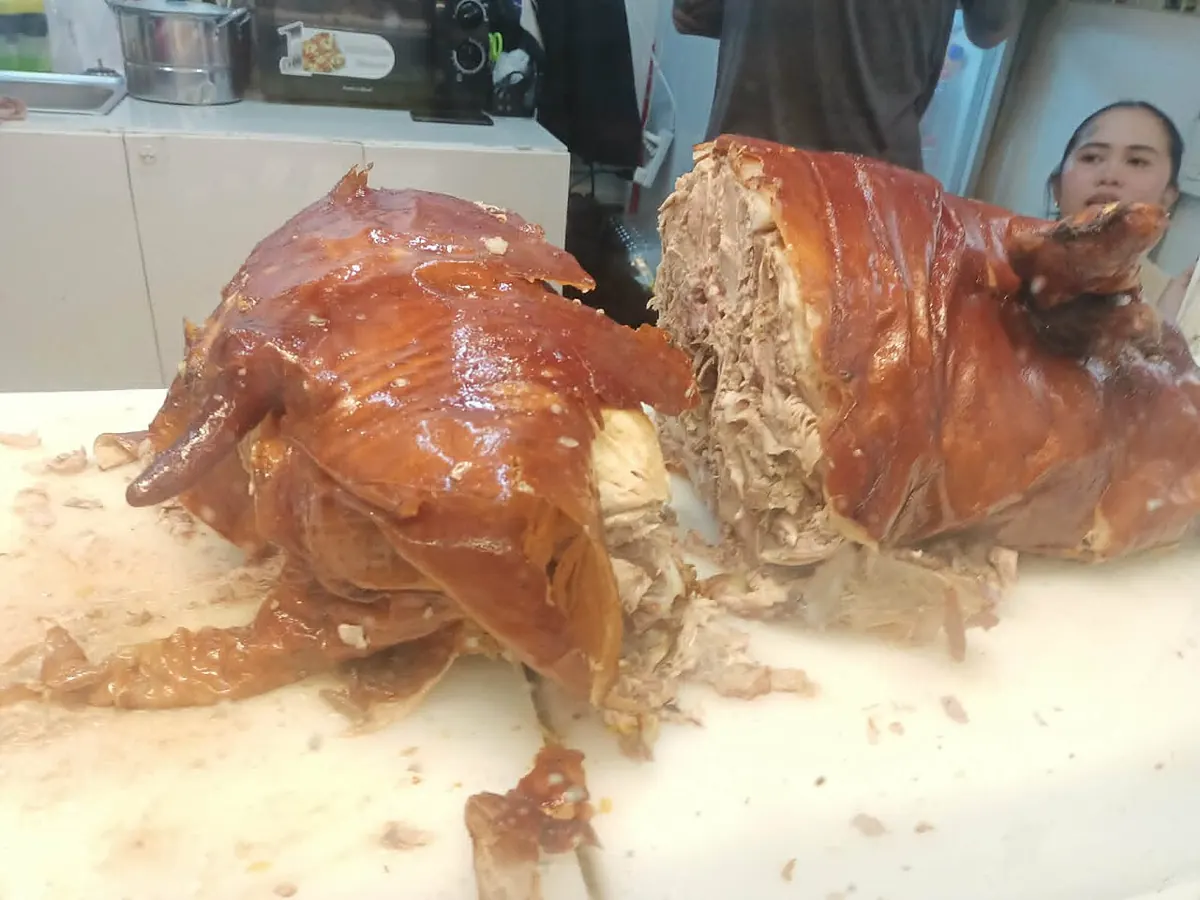
- Lechon stalls: order a few puso with a quarter kilo of roast pork.
A single puso typically costs only a few pesos to around ₱15 at street stalls. Prices are approximate and vary by place. For more ideas, browse our guide to Cebu street food and our list of cheap and delicious food in Cebu.
What to eat with puso
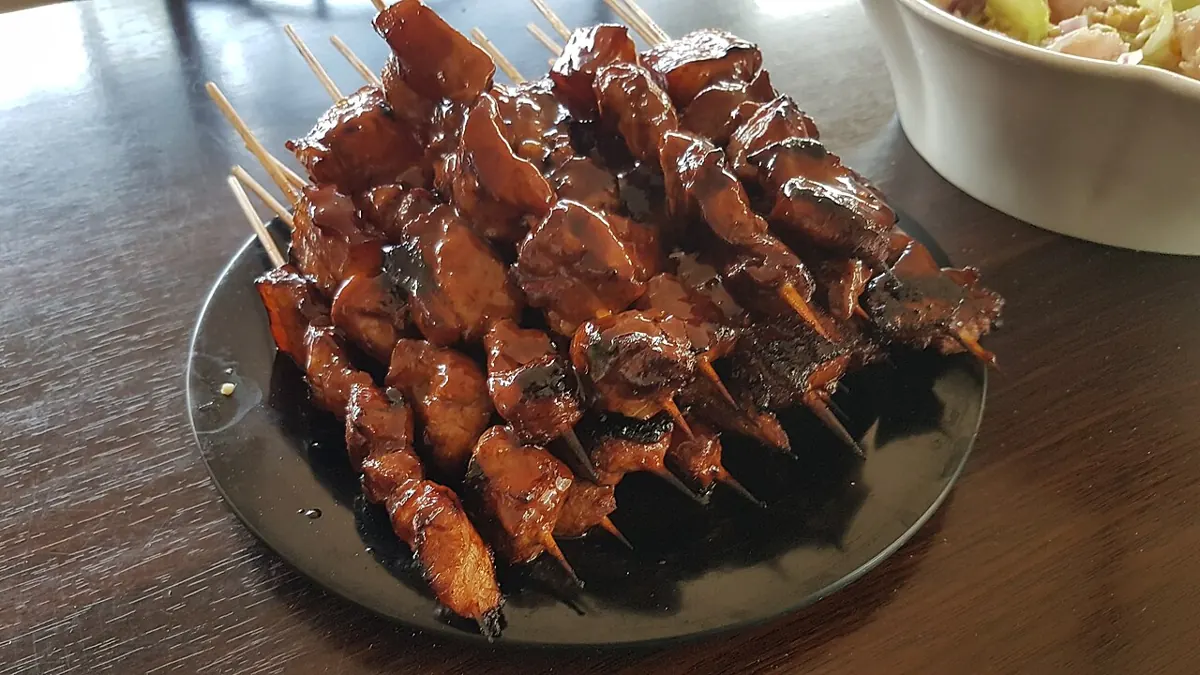
Puso goes well with almost anything salty, smoky or saucy. Try it with Filipino pork barbecue, grilled chicken, lechon, fried fish and sinugba seafood. It is also perfect for scooping up sauces from stews like lechon paksiw.
Frequently Asked Questions
What is hanging rice in Cebu?
Hanging rice is the English name for puso, rice cooked inside a woven pouch of young coconut leaves. It gets its name from the bunches of puso hung above food stalls.
How long do you boil puso?
Boil puso for about 45 minutes to 1 hour, keeping the pouches fully submerged. Check one pouch to be sure the rice is soft and firmly packed.
How much rice goes into each puso?
Fill each pouch only about one-third to one-half full with uncooked rice. The rice expands as it cooks and fills the pouch.
Can I use banana leaves instead of coconut leaves?
Banana leaves can be folded into rice parcels, but they cannot be woven like coconut leaves, so the result is a different style of wrapped rice. For true puso, use young coconut leaves.
How long does cooked puso last?
Puso is best eaten the same day. Kept in a cool place it usually lasts several hours, and in the fridge about a day; reheat by steaming or briefly boiling.