Cebu Lechon Recipe: Crispy Lechon Belly With Classic Stuffing
Why Cebu lechon needs no sauce, what goes inside the pig, and a reliable home recipe for crispy Cebu-style lechon belly.
In this article
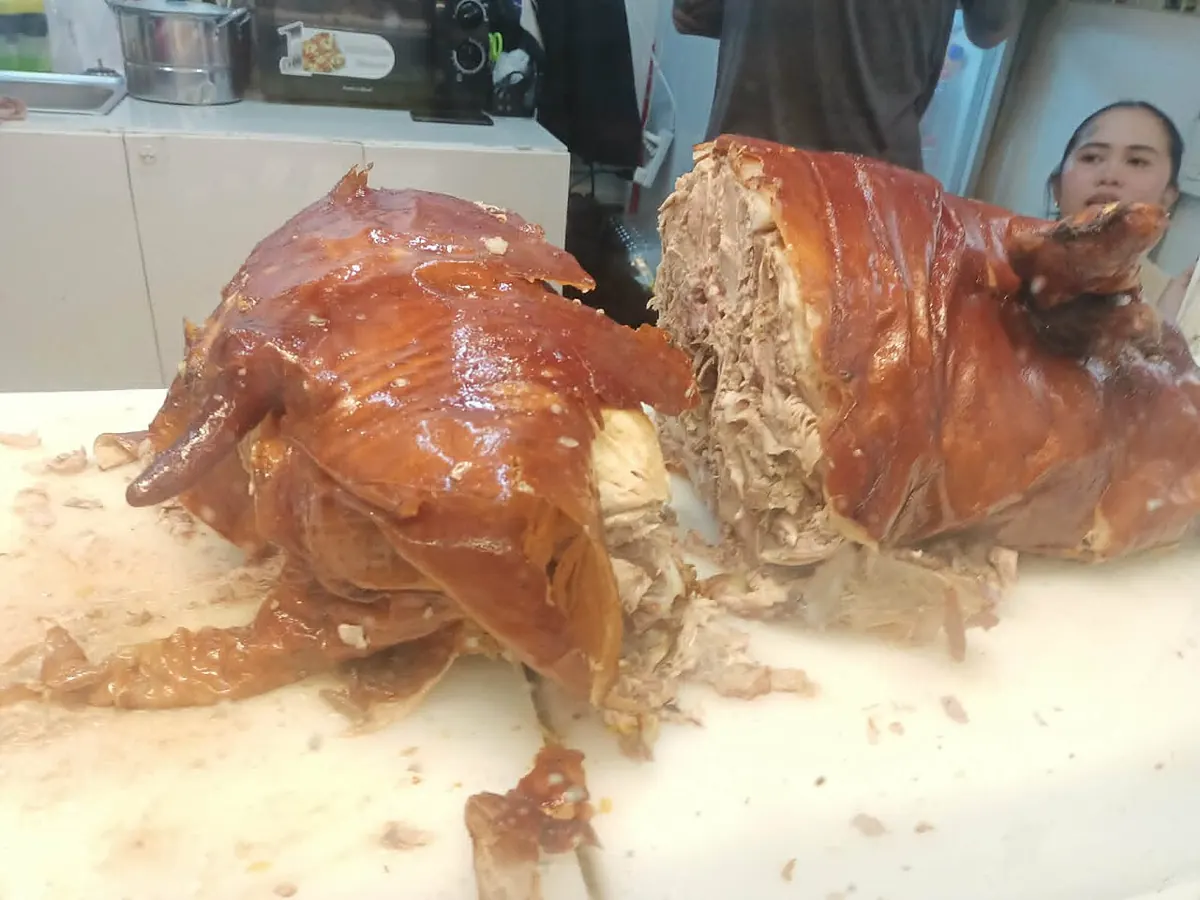
This Cebu-style lechon recipe gives you crackling skin and juicy, herb-scented meat from a home oven, using a rolled pork belly instead of a whole pig. The secret of Cebu lechon is the stuffing: lemongrass, garlic, onion, star anise, bay leaf, salt and pepper packed inside the meat so every bite is seasoned. That is why, in Cebu, nobody reaches for liver sauce.
Why Cebu Lechon Needs No Sauce
In Luzon, lechon is often roasted with only light seasoning and served with a sweet liver-based sauce. Cebu lechon takes the opposite approach. The cavity of the pig is rubbed with salt and stuffed with aromatics before it is sewn shut and roasted over charcoal for hours. The steam from the herbs seasons the meat from the inside, and the drippings keep it moist.
The result is meat that tastes of lemongrass and garlic all the way through, with a thin, glassy skin. Many Cebuanos will tell you that adding sauce to good lechon Sugbo (Cebu lechon) only hides the flavour. A little spiced vinegar on the side is the most you will usually see.
Lechon Recipe Stuffing: The Cebu Ingredients Explained
| Ingredient | What it does |
|---|---|
| Lemongrass (tanglad) | The signature fresh, citrusy aroma |
| Garlic | Savoury depth through the meat |
| Onion and spring onion | Sweetness and moisture |
| Star anise | Warm, slightly sweet note |
| Bay leaf | Herbal background |
| Rock salt and black pepper | Seasoning inside and out |
Some lechoneros (lechon roasters) guard small extras, such as a particular amount of star anise or a splash of soy sauce, but the core list above is shared by most Cebu-style recipes.
Talisay and Carcar: Cebu's Lechon Towns
Whole-pig lechon in Cebu is roasted by hand on a bamboo spit over charcoal, turned slowly for several hours. Towns in the south of Metro Cebu, especially Talisay City and Carcar City, are well known for their lechon makers, and roadside stalls selling lechon by the kilo are a familiar sight. Lechon is also central to fiestas, weddings and birthdays across the province.
When visiting, buy from a busy stall and ask for a mix of skin and meat. Prices are sold per kilo and vary by shop and season, so ask before ordering. If you have leftovers, turn them into lechon paksiw the next day. For more local eats, see our Cebu street food guide.
Ingredients
- 2 kg pork belly, skin on, in one rectangular slab
- 3 tbsp rock salt or coarse sea salt, divided
- 1 tbsp coarsely ground black pepper
- 1 whole head garlic, peeled and crushed
- 4 stalks lemongrass, bruised and cut to fit the belly
- 1 medium red onion, sliced
- 3 stalks spring onion, cut into long pieces
- 3 pieces star anise
- 4 dried bay leaves
- 1 tbsp soy sauce (optional)
- 2 tbsp white or cane vinegar, for the skin
- Kitchen twine
Instructions
- Lay the pork belly skin-side down. With a sharp knife, score the meat side lightly in a crosshatch so the seasoning gets in. Do not cut through the skin.
- Rub the meat side with 2 tbsp of the salt, the pepper and the soy sauce if using.
- Spread the crushed garlic, onion and spring onion along the centre. Lay the lemongrass stalks lengthwise on top, then add the star anise and bay leaves.
- Roll the belly tightly into a log so the skin is on the outside. Tie firmly with kitchen twine every 3-4 cm.
- Pat the skin completely dry with paper towels. Rub the skin with the remaining salt, place the roll on a rack over a tray and refrigerate uncovered overnight (8-12 hours). This dries the skin, the key to crispness.
- Next day, remove the roll from the fridge about 1 hour before cooking. Wipe off excess salt and brush the skin with the vinegar. Preheat the oven to 160°C.
- Roast on a rack over a tray with a little water in it for about 2 hours, until the meat is tender and a skewer slides into the thickest part easily.
- Raise the oven to 220-230°C and roast another 20-30 minutes, watching closely, until the skin puffs, blisters and turns deep golden.
- Rest for 15-20 minutes before removing the twine and slicing into thick rounds. Serve with plain rice or puso.
How to Make Lechon Crispy
Crisp skin is about removing moisture. These are the habits that make the difference:
- Dry the skin overnight in the fridge, uncovered. This is the most important step.
- Keep the skin dry during cooking. Don't baste the skin with the drippings.
- Finish hot. The final high-heat blast is what puffs the crackling.
- Use a rack so the bottom of the roll doesn't sit in fat and go soggy.
- Salt the skin well, then wipe off the excess before roasting.
How to Cook Lechon Without an Oven
No oven? A turbo broiler works well for smaller rolls of about 1 kg; cook at a moderate setting until tender and then increase the heat to crisp. You can also use a covered charcoal grill with indirect heat, keeping the coals to one side and turning the roll occasionally. Both methods follow the same rule: cook gently first, then crisp at the end.
Frequently Asked Questions
What is the secret ingredient of Cebu lechon?
There isn't one single secret; it's the stuffing combination of lemongrass, garlic, onion, star anise, bay leaf, salt and pepper. Lemongrass gives Cebu lechon its signature aroma.
Why is Cebu lechon eaten without sauce?
The aromatics stuffed inside season the meat during roasting, so it is already flavourful. Many people enjoy it plain or with a little spiced vinegar.
Can I make this lechon recipe with a smaller cut?
Yes. A 1 kg belly works well; reduce the slow-roast time to roughly 1 hour 15 minutes to 1 hour 30 minutes, then crisp the skin as usual.
Where is the best lechon in Cebu?
Talisay and Carcar are both well known for lechon, and there are many respected shops in Cebu City. Try a few and pick your favourite, since locals love to debate this question.