Adobong Manok Recipe with Pork: Ingredients and Procedure
The Filipino dish everyone argues about. Our classic chicken and pork adobo recipe with clear ingredients, procedure and regional variations.
In this article
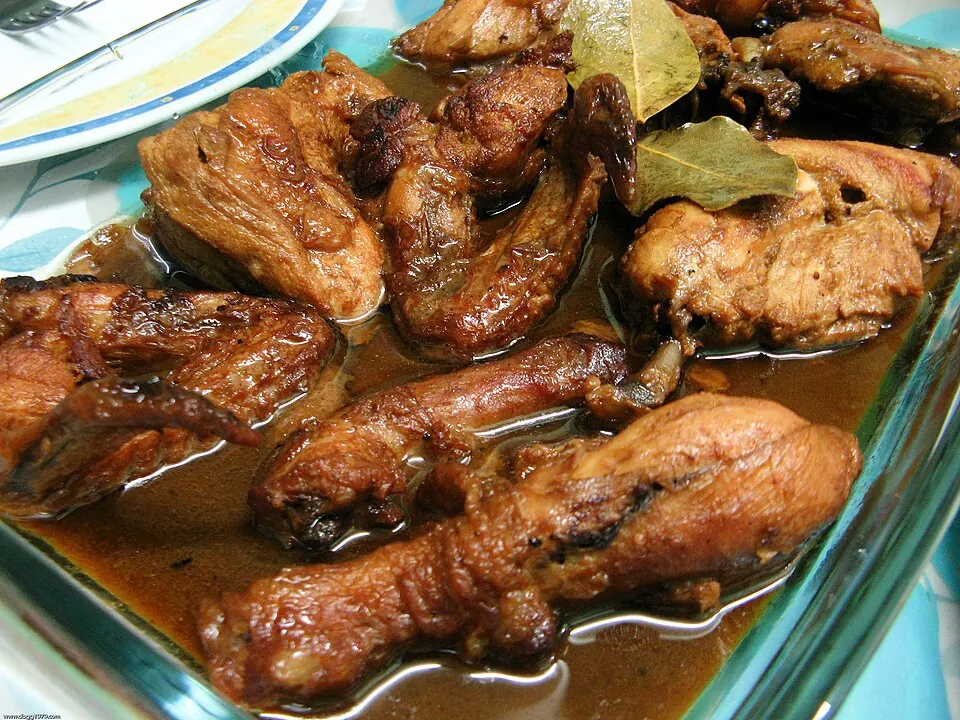
This adobong manok recipe combines chicken (manok) and pork (baboy) braised in vinegar, soy sauce, garlic, bay leaves and peppercorns until tender and glossy. It is the most loved home dish in the Philippines, and every family has its own version. Below are the ingredients and procedure for a classic adobo, plus regional twists you can try.
What Is Adobo?
Adobo is a cooking method as much as a dish. Meat is simmered in vinegar with garlic, salt or soy sauce, and spices. Vinegar was a practical choice in a hot climate because it helped food keep longer. The name adobo comes from a Spanish word for marinade, but the technique of cooking in vinegar is widely seen as native to the islands.
Chicken and pork together give you the best of both: tender chicken, rich pork fat and a deeply flavoured sauce.
Ingredients
- 500 g chicken, cut into serving pieces (thighs and drumsticks work best)
- 500 g pork belly or pork shoulder, cut into 4 cm cubes
- 1/2 cup cane or coconut vinegar
- 1/3 cup soy sauce
- 1 cup water
- 1 whole head garlic, peeled and crushed
- 3 to 4 dried bay leaves (laurel)
- 1 tsp whole black peppercorns, lightly crushed
- 1 tbsp brown sugar (optional)
- 2 tbsp cooking oil
- Salt to taste
Instructions
- Combine chicken, pork, soy sauce, half of the garlic and the crushed peppercorns in a bowl. Marinate for at least 30 minutes, or up to overnight in the refrigerator.
- Heat oil in a heavy pot over medium heat. Fry the remaining garlic until golden, then remove and set aside for topping.
- Remove the meat from the marinade (keep the marinade). Brown the pork first, then the chicken, for about 3 to 4 minutes per batch.
- Return all the meat to the pot. Pour in the marinade, water and bay leaves, and bring to a boil.
- Add the vinegar and let it boil for 2 to 3 minutes without stirring. This mellows its sharpness.
- Cover, lower the heat and simmer for 35 to 45 minutes, until the pork is fork-tender and the chicken is cooked through.
- Uncover, add brown sugar if using, and simmer for 10 more minutes to reduce the sauce until slightly thick.
- Taste and adjust with salt or more soy sauce. Top with the fried garlic and serve with hot rice.
Adobong Manok Recipe Procedure Explained
Many students search for the "procedure of adobong manok" for school. The basic procedure has five stages:
| Stage | What happens | Why it matters |
|---|---|---|
| 1. Marinate | Meat rests in soy sauce, garlic and pepper | Seasons the meat |
| 2. Brown | Meat is seared in oil | Adds flavour and colour |
| 3. Braise | Simmered with liquid, vinegar and bay leaves | Tenderises the meat |
| 4. Reduce | Sauce is simmered uncovered | Thickens and concentrates flavour |
| 5. Serve | Topped with fried garlic, served with rice | Adds aroma and crunch |
Adobo Manok vs Adobo Baboy
You can cook either meat on its own with the same recipe.
- Chicken only: Use 1 kg chicken and cut simmering time to 25 to 30 minutes.
- Pork only: Use 1 kg pork belly or shoulder and simmer 45 to 60 minutes, adding water if it dries out. For crispy edges, fry the cooked pork in its own rendered fat at the end.
Regional Variations
Adobong Puti
Puti means white. This version skips soy sauce entirely and uses only vinegar, salt, garlic, pepper and bay leaves. The result is pale, tangy and very garlicky. Some cooks finish it by frying the meat until crisp.
Adobo sa Gata
Common in Bicol and other coconut-growing regions, this version adds coconut milk (gata) and sometimes chili. It is creamy and rich, close in spirit to our Bicol Express.
Bisaya-Style Adobo
In Cebu and much of the Visayas and Mindanao, home cooks often make a sweeter, saucier adobo, sometimes with a little sugar and onions. Some families cook it until the sauce is almost gone and the meat is slightly crispy, a dry style (uga means dry in Bisaya) that keeps well for packed lunches. In Davao, you may find versions with a touch of chili.
Adobong Dilaw
Popular in parts of Batangas and elsewhere, this version uses turmeric (luyang dilaw) instead of soy sauce, giving a bright yellow colour.
| Variation | Key difference | Flavour |
|---|---|---|
| Classic | Soy sauce and vinegar | Salty, tangy, savoury |
| Adobong puti | No soy sauce | Sharp, garlicky |
| Adobo sa gata | Coconut milk added | Creamy, mild |
| Bisaya style | Often sweeter or cooked dry | Sweet-savoury |
| Adobong dilaw | Turmeric instead of soy | Earthy, bright |
Tips for Better Adobo
- Use Filipino vinegar. Cane vinegar or coconut vinegar gives the right flavour. If using strong distilled vinegar, reduce the amount slightly.
- Don't stir the vinegar right away. Letting it boil first cooks off the harsh edge.
- Choose fatty cuts. Pork belly and chicken thighs stay moist during long braising.
- Balance at the end. Adobo should taste salty, sour and savoury. Adjust once the sauce has reduced.
What to Serve with Adobo
Adobo is traditionally eaten with plenty of steamed rice. Add a simple vegetable side like our utan Bisaya to balance the rich sauce. On rainy days, pair it with a bowl from our list of Filipino soups. Leftover adobo flakes make excellent fried rice for breakfast.
Frequently Asked Questions
What are the ingredients of adobong manok?
The basic ingredients are chicken, vinegar, soy sauce, garlic, bay leaves, black peppercorns and water. Many cooks add a little sugar, and some add pork for a richer sauce.
What is the procedure of adobong manok?
Marinate the chicken in soy sauce and garlic, brown it in oil, then simmer with vinegar, water and bay leaves until tender. Finish by reducing the sauce and topping with fried garlic.
Should I add vinegar or soy sauce first?
Most cooks add soy sauce first in the marinade and add vinegar during braising. Let the vinegar boil for a few minutes before stirring to soften its sharpness.
How long does adobo last in the fridge?
Stored in a sealed container, adobo usually keeps well for 3 to 4 days in the refrigerator. Always reheat it thoroughly before eating.