Sinulog Festival Guide: History, Dance and Tips for Visitors
Everything you need to know about the Sinulog Festival in Cebu: where it came from, what the dance means, when it happens and how to enjoy it safely.
In this article
- Sinulog Festival quick facts
- Sinulog history: from river current to street parade
- What happens during Fiesta Señor and the Sinulog
- The Sinulog song and the beat of the drums
- Tips for visitors: where to watch and how to enjoy it
- Safety during the Sinulog Festival
- Sinulog compared with other Philippine festivals
- Make it a longer trip
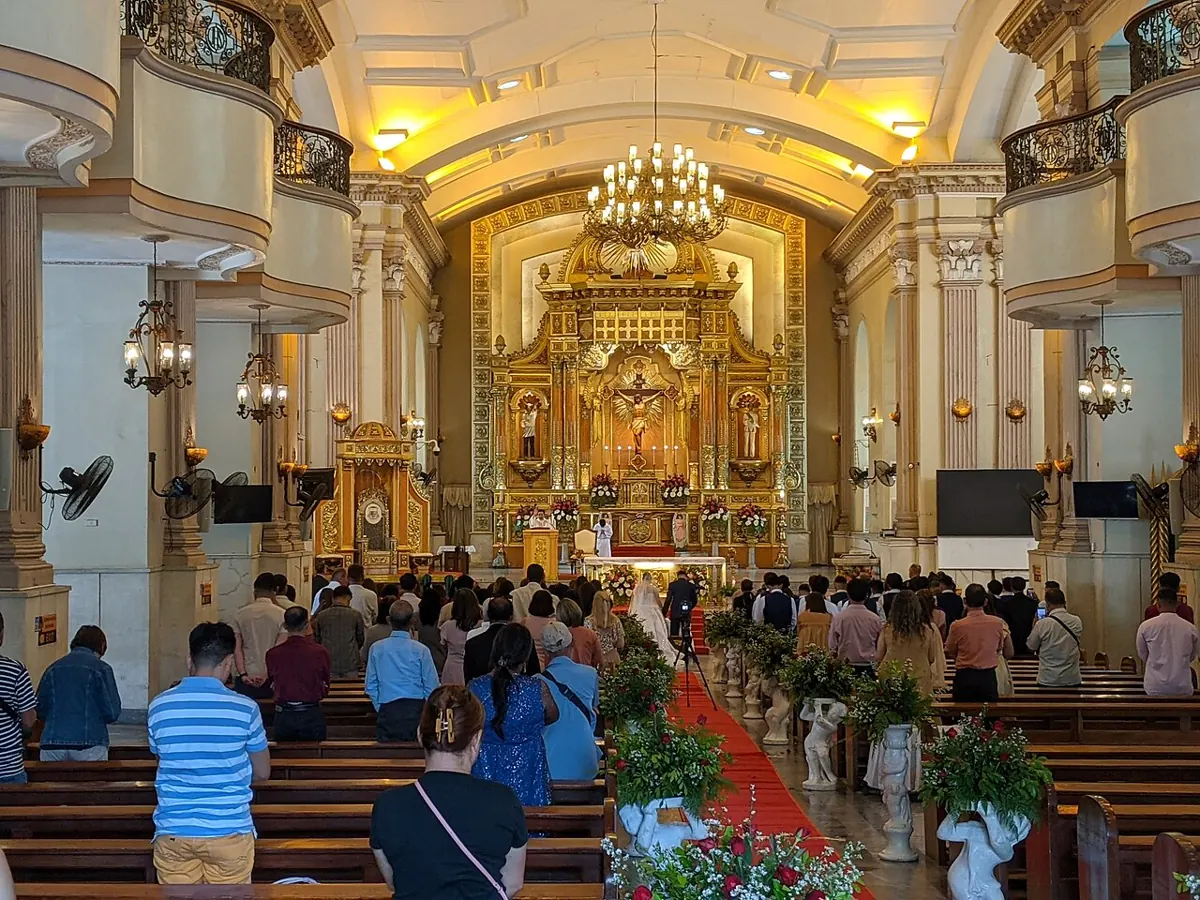
The Sinulog Festival is Cebu City's biggest celebration, held every January in honour of the Santo Niño, the image of the Child Jesus kept at the Basilica Minore del Santo Niño. It combines a centuries-old religious devotion with a modern street-dance parade, and its main day falls on the third Sunday of January. If you want to understand why so many Filipinos call it the country's greatest festival, start with its history and its prayer-like dance.
Sinulog Festival quick facts
| Item | Details |
|---|---|
| Where | Cebu City, with related events in nearby towns |
| When | Main day: third Sunday of January |
| Honours | The Santo Niño de Cebu (Señor Santo Niño) |
| Religious feast | Fiesta Señor, a novena of masses before the main day |
| Signature chant | Pit Señor! (short for sangpit sa Señor, a call to the Lord) |
| Dance step | Two steps forward, one step back, to the beat of drums |
Sinulog history: from river current to street parade
The word sinulog comes from the Cebuano sulog, meaning "current" or "flow of water". The dance is said to imitate the forward-and-back movement of a river current, which is why the basic step moves two paces forward and one pace back. For generations, devotees, including the women who sell candles outside the Basilica, have danced this step while praying, lifting candles and asking the Santo Niño for favours or giving thanks.
The roots of the devotion go back to 1521, when the Portuguese explorer Ferdinand Magellan, sailing for Spain, reached Cebu. According to historical accounts, the image of the Child Jesus was given as a baptismal gift to the wife of Rajah Humabon, who took the Christian name Juana. Decades later, in 1565, members of Miguel López de Legazpi's expedition found the image in a burned house, and it has been venerated in Cebu ever since. You can read the full story in our guide to the Santo Niño de Cebu.
Sinulog festival history in modern times
The Sinulog as a large organised street parade is much younger than the devotion. It took shape in 1980, when the first parade was organised with students and community groups dancing the Sinulog step in the streets. Over the following years the Cebu City government and the Sinulog Foundation turned it into a full festival with contingents from schools, barangays and towns across the Visayas and Mindanao. Today it draws huge crowds from across the country and abroad.
What happens during Fiesta Señor and the Sinulog
The festival is really two things running side by side. The religious side, Fiesta Señor, is led by the Augustinian friars of the Basilica. The civic side, the Sinulog grand parade and its related shows, is organised with the city government.
Fiesta Señor (religious events)
- Novena masses: nine days of masses at the Basilica before the main Sunday, often packed from dawn until night.
- Walk with Jesus / Walk with Mary: pre-dawn processions through the downtown streets that open the festival season.
- Fluvial procession: on the Saturday before the main day, the image is carried by boat along the coast, accompanied by decorated vessels.
- Re-enactment of the first baptism: a staged retelling of the 1521 baptism of Rajah Humabon and his wife.
- Solemn foot procession: a long Saturday procession through the city streets, with devotees walking and praying for hours.
- Pontifical mass: the main mass on the Sunday morning before the parade.
The grand parade
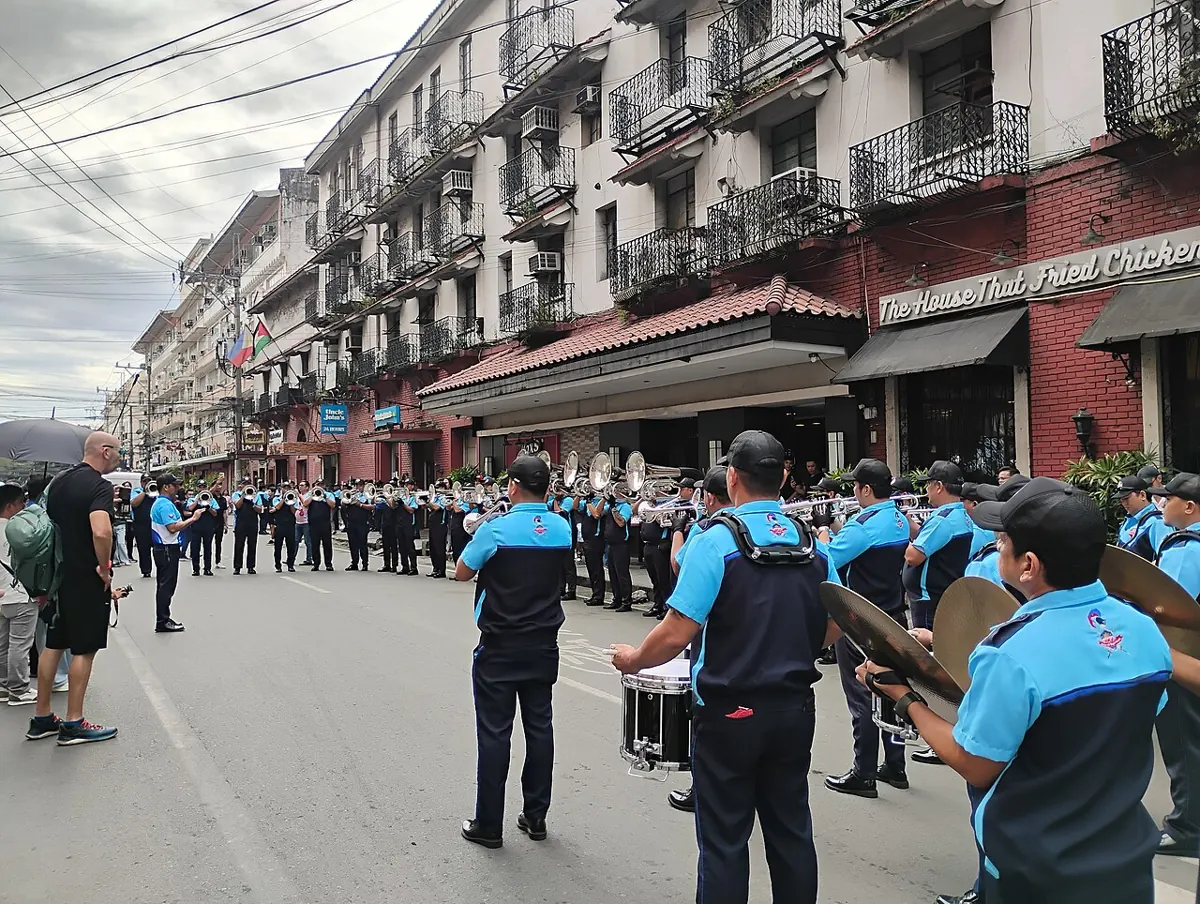
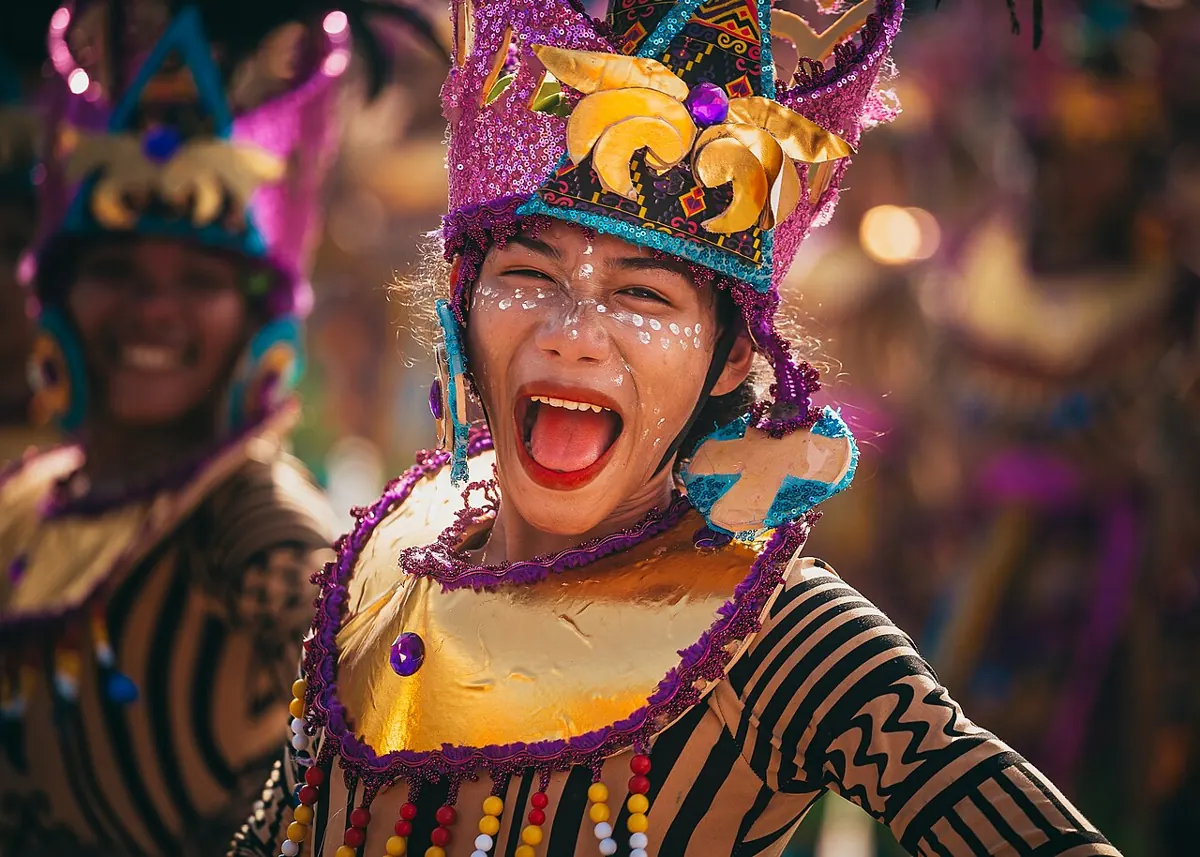
On the third Sunday, contingents dance through the streets in elaborate costumes, many carrying replicas of the Santo Niño. Performances are judged in categories such as Sinulog-based (the traditional style) and free interpretation. The parade route and the performance venue have changed over the years, so always check the official schedule before you go.
The Sinulog song and the beat of the drums
Ask any Cebuano what the Sinulog sounds like and they will tap out the drumbeat. The festival music is built on drums, gongs and brass, played in a steady rhythm that matches the two-forward, one-back step. Over the years, official theme songs have been written for particular editions, and the crowd chant Pit Señor! rings out at every procession and performance.
If you are searching for a specific Sinulog song, look for the official festival pages and the Basilica's channels, which usually share the music and hymns used for that year.
Tips for visitors: where to watch and how to enjoy it
The Sinulog is joyful, but the crowds are enormous. A little planning makes the difference between a great day and a stressful one.
Where to watch
- Along the parade route: free, lively and crowded. Arrive early to find a spot, and bring water.
- Grandstand or performance venue: ticketed seats where contingents perform their full routines. Tickets sell out, so buy only from official sellers.
- Basilica and Plaza Sugbo area: best for the religious side, especially the novena masses and the candle dancers. Nearby is Magellan's Cross.
Practical tips
- Book accommodation months ahead. Hotels in Cebu City and Mactan fill up quickly and rates rise.
- Expect road closures. Many downtown streets are closed on the main weekend. Walking is often faster than any vehicle.
- Dress for heat and rain. January in Cebu is usually warm with occasional showers. Check the forecast on our Cebu weather page.
- Carry little and keep it close. Use a small cross-body bag, leave valuables in your hotel and watch out for pickpockets in dense crowds.
- Expect paint and water. After the parade, the street parties can get messy. Wear clothes you do not mind ruining.
- Respect the devotion. Many people around you are praying. Be quiet and polite inside the Basilica, and do not block processions for photos.
Safety during the Sinulog Festival
Local authorities usually deploy large numbers of police, marshals and medical teams, and mobile phone signal is sometimes limited around the main venues for security reasons. Follow instructions from marshals, stay hydrated, and know where the first aid stations are. If you are travelling with children, write your phone number on a card in their pocket.
Bags may be inspected at entry points, and items such as sharp objects and large umbrellas may not be allowed in some areas. Rules vary each year, so check announcements from the Cebu City government and the organisers before you go.
Sinulog compared with other Philippine festivals
| Festival | Place | Month | Focus |
|---|---|---|---|
| Sinulog | Cebu City | January | Santo Niño devotion and street dance |
| Ati-Atihan | Kalibo, Aklan | January | Santo Niño, painted-face street revelry |
| Dinagyang | Iloilo City | January | Santo Niño, tribal-style dance |
| Kadayawan | Davao City | August | Harvest and indigenous cultures |
| MassKara | Bacolod City | October | Smiling masks and street dance |
If you enjoy Sinulog, Davao's August celebration is a great contrast. Read our guide to the Kadayawan Festival to plan a second festival trip.
Make it a longer trip
Many visitors combine the festival with beaches and day trips. Our Cebu tourist spots guide covers the best places to visit once the parade is over, from the south coast to the northern islands.
Frequently Asked Questions
When is the Sinulog Festival held?
The main day of the Sinulog is the third Sunday of January every year. Religious events, including the novena masses of Fiesta Señor, start about nine days earlier.
What does Pit Señor mean?
Pit Señor is short for sangpit sa Señor, Cebuano for "call to the Lord" or "plea to the Lord". Devotees shout it as a prayer and a greeting throughout the festival.
Why do Sinulog dancers move two steps forward and one step back?
The step imitates the current (sulog) of a river, which gives the festival its name. It is also a prayer movement that devotees have performed before the Santo Niño for generations.
Is the Sinulog Festival free to watch?
Watching from the streets and attending the religious events is free. Seats at the main performance venue usually require tickets, which should be bought only through official channels.
Is it safe to attend the Sinulog?
The festival is generally well policed, but crowds are huge. Keep valuables to a minimum, stay with your group, follow marshals and keep hydrated.