Santo Niño de Cebu: History of the Philippines' Oldest Icon
How a small image of the Child Jesus given in 1521 became the heart of Cebu's faith and the Sinulog Festival. The history of the Santo Niño de Cebu.
In this article
The Santo Niño de Cebu is a small wooden image of the Child Jesus that is regarded as the oldest surviving Christian religious image in the Philippines. According to historical accounts, it was given in 1521 by Ferdinand Magellan's expedition to the wife of Rajah Humabon, the ruler of Cebu, and was found again in 1565 by Spanish soldiers of Miguel López de Legazpi's expedition. Today it is enshrined in the Basilica Minore del Santo Niño and honoured every January during Fiesta Señor and the Sinulog Festival.
Santo Niño de Cebu quick facts
| Item | Details |
|---|---|
| What it is | Image of the Child Jesus dressed as a king |
| First arrived | 1521, with Magellan's expedition |
| Given to | Rajah Humabon's wife, baptised as Juana |
| Rediscovered | 1565, during Legazpi's expedition |
| Home | Basilica Minore del Santo Niño, Cebu City |
| Main feast | Fiesta Señor, third Sunday of January |
| Related festival | Sinulog |
1521: Magellan, Rajah Humabon and Queen Juana
In 1521, the expedition led by the Portuguese navigator Ferdinand Magellan, sailing for the Spanish crown, arrived in Cebu. Rajah Humabon, the local ruler, welcomed the visitors, and accounts written by members of the expedition, notably the chronicler Antonio Pigafetta, describe a mass baptism of Humabon, his wife and many of their people.
During these events, the small image of the Child Jesus was presented to Humabon's wife, who took the Christian name Juana. Pigafetta's account describes her being moved by the image. A large wooden cross was also planted, remembered today at Magellan's Cross, which stands near the Basilica.
Within weeks, Magellan was killed in the Battle of Mactan against the forces of Lapulapu, and the surviving members of the expedition left Cebu. The image stayed behind.
1565: the image is found again
More than four decades later, in 1565, a Spanish expedition led by Miguel López de Legazpi arrived in Cebu. After a confrontation, a settlement was burned. According to Spanish accounts, a soldier found the image of the Child Jesus inside a wooden box in one of the burned houses, unharmed.
The discovery was treated as a sign, and the Spaniards built a church on the site where the image was found. That site became the location of today's Basilica, and the Augustinian friars who came with the expedition have been custodians of the image ever since.
Did the people of Cebu keep the devotion between 1521 and 1565?
Historians have discussed how the image was regarded in the decades between Magellan and Legazpi. Some accounts suggest it was kept and treated as a sacred object by local people, though the details are not fully documented. What is clear is that the 1565 rediscovery marked the beginning of continuous devotion that has lasted more than four and a half centuries.
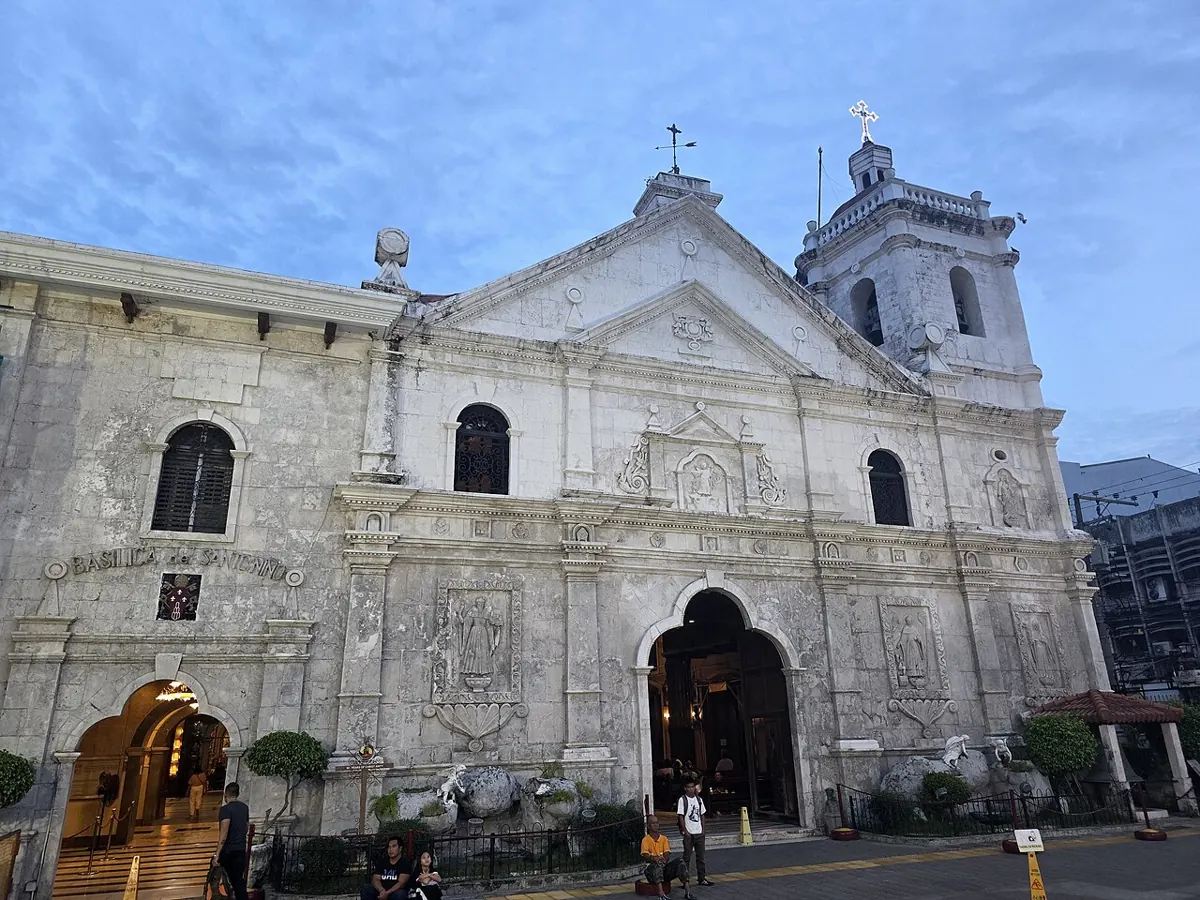
The Basilica Minore del Santo Niño
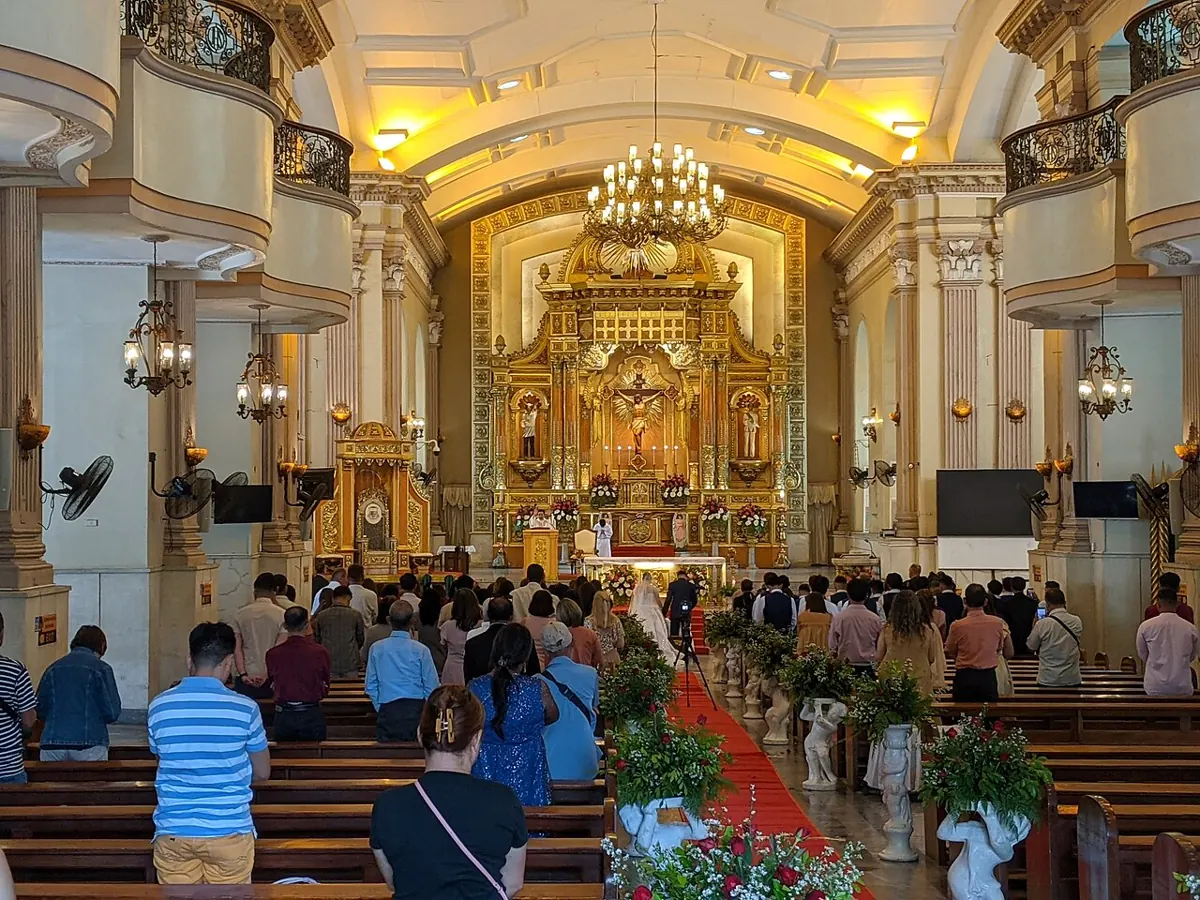
The church that houses the image has been rebuilt several times after fires and damage. The present stone church dates from the eighteenth century and is one of the oldest churches in the Philippines. In 1965, on the 400th anniversary of Christianity's establishment in the country, the church was raised to the rank of a minor basilica by the Pope.
The Basilica was damaged in the 2013 Bohol earthquake, which brought down part of its bell tower, and it was later restored. Today it is the centre of Cebu's religious life, with masses held throughout the day.
Fiesta Señor and the Sinulog
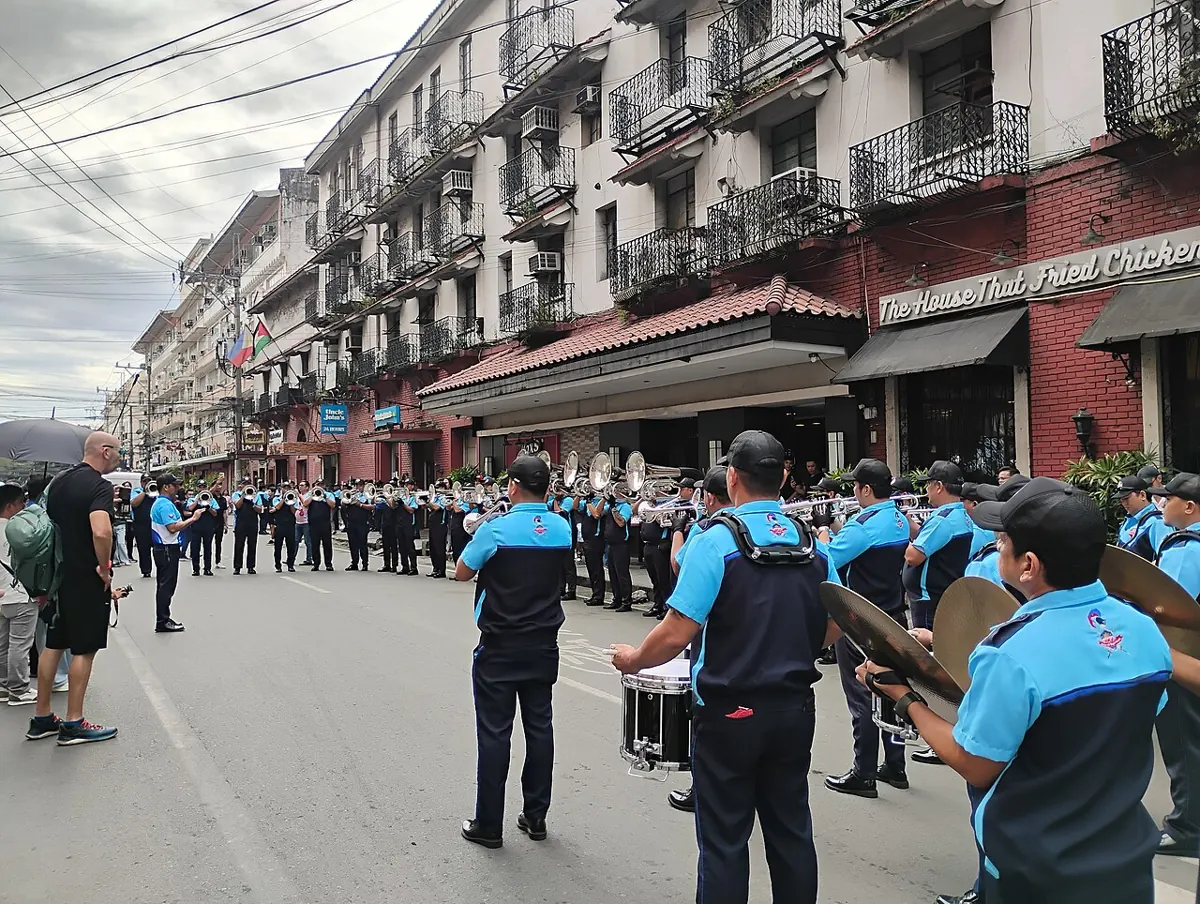
The feast of the Santo Niño in Cebu, called Fiesta Señor, is celebrated on the third Sunday of January. It is preceded by nine days of novena masses, a fluvial procession, a re-enactment of the first baptism and a solemn foot procession through the streets.
Running alongside these religious events is the Sinulog, Cebu's famous street-dance festival. The Sinulog dance, two steps forward and one step back, is a prayer movement performed for the Santo Niño, and dancers carry replicas of the image during the grand parade. Read our full Sinulog Festival guide to plan your visit.
What the Santo Niño looks like
The image is small, roughly 30 centimetres tall, carved in wood and depicting the Child Jesus standing, often dressed in rich red robes and a crown. He typically holds a globe topped with a cross in one hand, a symbol of authority over the world, while the other hand is raised in blessing. The image is believed to have been made in Europe, with Flemish origin commonly cited.
Devotion to the Santo Niño today
Devotion to the Santo Niño is found throughout the Philippines, not just in Cebu. You will see small images of the Child Jesus in homes, jeepneys, shops and offices, often dressed in different colours of robes. Many Filipinos turn to the Santo Niño for prayers about family, health, work and safe travel.
Common expressions of devotion include:
- Attending the novena masses in January, often for nine consecutive days.
- Dancing the Sinulog prayer with candles at the Basilica, a tradition kept alive by the candle vendors outside.
- Shouting "Pit Señor!" (short for sangpit sa Señor, "call to the Lord") during processions.
- Keeping a home image and dressing it for special occasions.
Other festivals honour the Santo Niño as well, including Ati-Atihan in Kalibo, Aklan, and Dinagyang in Iloilo City.
Visiting the Basilica and nearby sites
The Basilica is in downtown Cebu City, within walking distance of Magellan's Cross, Plaza Sugbo and Fort San Pedro. You can easily visit all of them in half a day. For a full plan, see our Cebu itinerary for 3 to 5 days and our list of Cebu tourist spots.
| Nearby site | What to see |
|---|---|
| Magellan's Cross | Kiosk housing the cross associated with the 1521 baptism |
| Plaza Sugbo | Open plaza beside the Basilica and the Cross |
| Fort San Pedro | Spanish-era fort near the port |
| Cebu Metropolitan Cathedral | Seat of the Archdiocese of Cebu, a short walk away |
For more on Cebu's history and its people, read about famous personalities from Cebu.
Frequently Asked Questions
Who gave the Santo Niño de Cebu?
According to historical accounts, the image was presented in 1521 by Ferdinand Magellan's expedition to the wife of Rajah Humabon, who was baptised with the name Juana.
When was the Santo Niño found again?
It was found in 1565 by a soldier of Miguel López de Legazpi's expedition, inside a box in a burned house in Cebu. A church was built on the spot.
Where is the original Santo Niño de Cebu?
The original image is kept at the Basilica Minore del Santo Niño in downtown Cebu City, in a chapel where devotees can view it behind glass.
When is the feast of the Santo Niño in Cebu?
Fiesta Señor is celebrated on the third Sunday of January, together with the Sinulog Festival.
Why is the Santo Niño important to Filipinos?
It is regarded as the oldest surviving Christian image in the Philippines and a symbol of the country's Christian history. For many Filipinos, it is also a deeply personal focus of prayer.